




iQuanta CAT Student
A Day Before CAT Exam

Converted
IIM Bangalore
Watch Rushikesh
share his experience

Join iQuanta's CAT 2026 Online Course with a focused 3 Months study plan designed for complete CAT preparation. Live Classes, Test Series & 24x7 Doubt Support to achieve your 99+%ile IIM goal















iQuanta’s 99+%ilers share their CAT preparation journey on the Facebook group. Check their detailed strategy, experience and how iQuanta helped them reach to 99+%ile.
←Swipe to see more success stories→
iQuanta CAT Course featuring Dual Pedagogy, great results, unique teaching methods, makes it the best CAT Online Coaching.
Gain Unfair Advantage with the Best CAT Coaching in India.




Learn from Scratch with CAT 100%iler.
Concept-Based Learning + Real CAT Application Practice







VARC Essential takes the guesswork out of CAT Verbal Ability and Reading Comprehension. VARC becomes easy as soon as you understand that whatever you need to solve a question is actually in the paper. No formula, theorem, facts - you just need imagination. That makes VARC, the easiest section to improve in the CAT exam. CAT VARC is usually from a specific set of genres or themes and from a few publications. Contemporary Technology, Indian History, Arts & Literature, Economics, Philosophy and a few more. You are not weak in VARC, you are just unfamiliar with most of the terminologies associated.
iQuanta CAT Course offer VARC Essentials which are 500 most commonly occurring terms and themes that have come in CAT Exam.
Let’s take communism. With a video on Communism, you will first learn what it means, how did the word originate and what is the basic fundamental thought behind it through a video explainer.
You then get more articles related to communism so that you can expand on your knowledge. At the end of it, you solve 2 RCs related to communism and at the end of it, you are sure of doing such RCs when it comes in the CAT Exam. Familiarity also increases speed, since it makes it that much easier to read and comprehend.
P.S - Doing a RC is pretty much like reading a story, the idea is to just fall in love with it. Getting a good score in CAT is just an added bonus.


The CAT QA syllabus is basically a middle school syllabus (from 6th to 10th class). CAT questions build on the foundational concepts, and the major challenge in the CAT exam is solving 12-13 questions correctly in under 40 minutes.
The non-engineer's QA module represents the full refresher of your core NCERT content, which is relevant for the CAT exam. It is insanely useful for people who are weak in Mathematics or people who have lost touch with maths since it’s just been a long while since you had to do mathematics. The entire syllabus is covered in 70 hours of content along with practice. Non-engineer's QA is a part of iQuanta CAT full course. You can get access to the module as soon as you can go through the foundational concept before a live class.


There are two major problems students face while trying to solve a LRDI Set
A. How do I approach it?
B. How do I make sense of the terms or the data that has been given to me?
All other problems such as selecting which sets to solve, solving it in a stipulated time are follow ups of the above problem.
LRDI Essential brings structure to all the chaos you experience while trying to get through CAT LRDI the first time. Over 20 Hours of Content taking care of all important concepts, terms, complex cases such as different seating arrangement, games and tournaments, selection, cubes and much more along with associated practice set complete with video solutions.
The rationale is to bring syllabus and structure to CAT LRDI and provide a framework for even an absolute beginner.

Learn from Scratch with CAT 100%iler.
CAT Live Classes are conducted by India’s Best Faculties. The live classes of iQuanta’s CAT Full Course 2026 are designed to clarify both basic and advanced-level concepts for all the sections. The classes start with clearing concepts, practicing questions while simultaneously solving doubts. The live class begins right from basics and end up at CAT Level. After Each live class, you get your assignments on your dashboard. Live Classes also include personalised mentorship and guidance from faculties and mentors.


Concept-Based Learning + Real CAT Application Practice
At iQuanta, we make CAT preparation smarter, not harder. The CAT syllabus is primarily built around Class 6–10 fundamentals, but what makes the exam challenging is how it tests multiple core concepts together under time pressure. That’s exactly where iQuanta’s unique approach helps students stand out.
Every iQuanta CAT Live Class is designed to strengthen conceptual understanding — and it’s immediately followed by an Application Class where students solve CAT-level practice questions based on the same topic.
This means concept learning and question practice happen together, within the same structured program.
Through this method, students not only complete the entire CAT syllabus efficiently but also build the speed, accuracy, and confidence required for the actual exam.
That’s one of the biggest reasons why iQuanta has produced the highest number of 99%ilers in the CAT exam and is widely considered the best CAT coaching online for serious aspirants preparing for CAT 2026 and beyond.


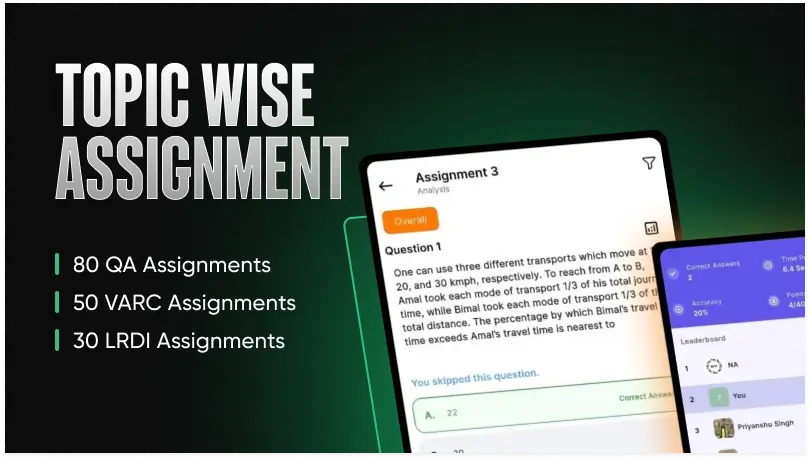
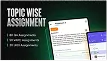
Assignments are typically post-class practice sessions of the CAT full course 2026. It comprises CAT-level questions with a wide range of difficulty levels. It is designed to evaluate how well candidates have grasped the concepts covered in both live and application-based classes.
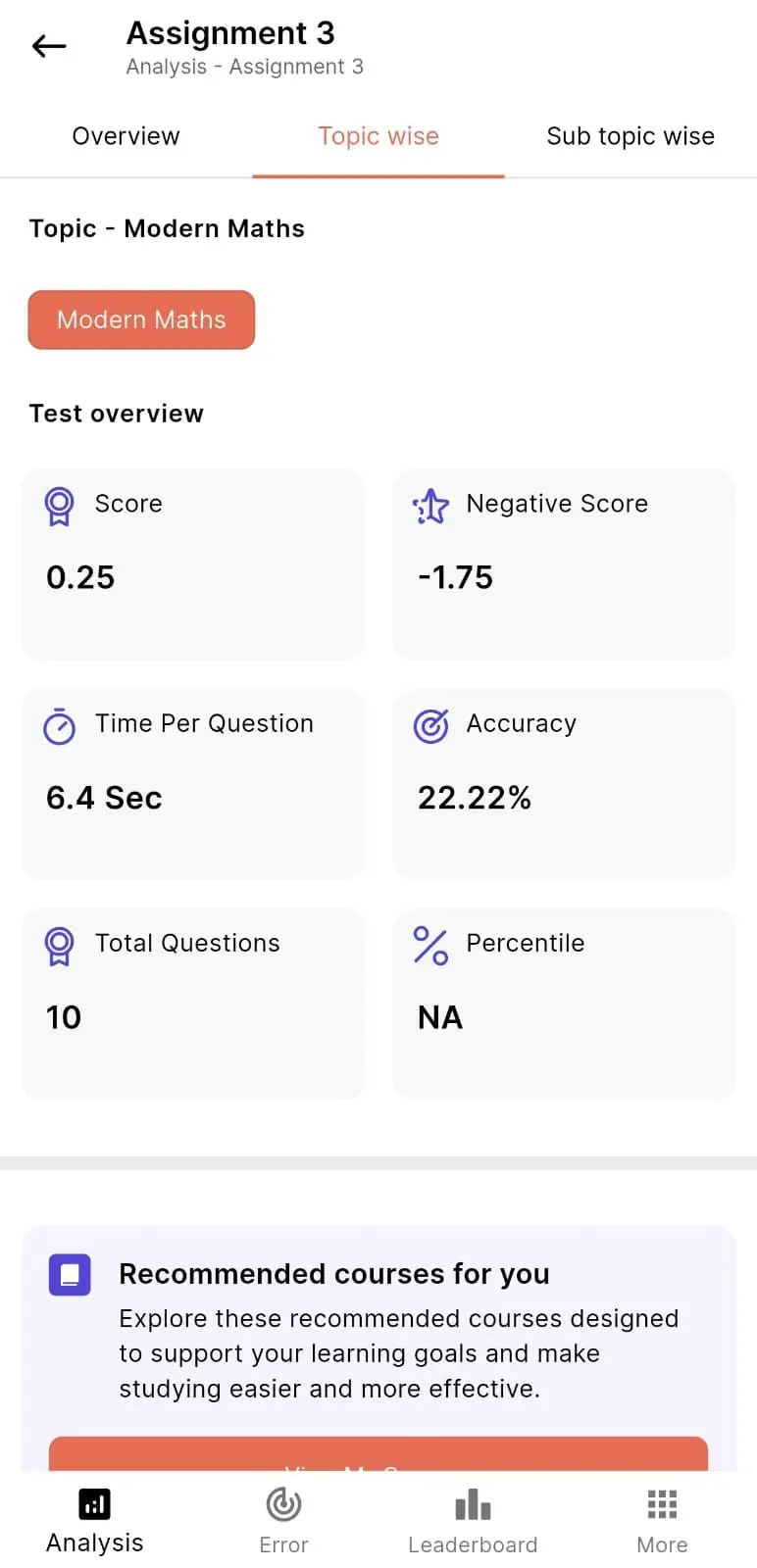
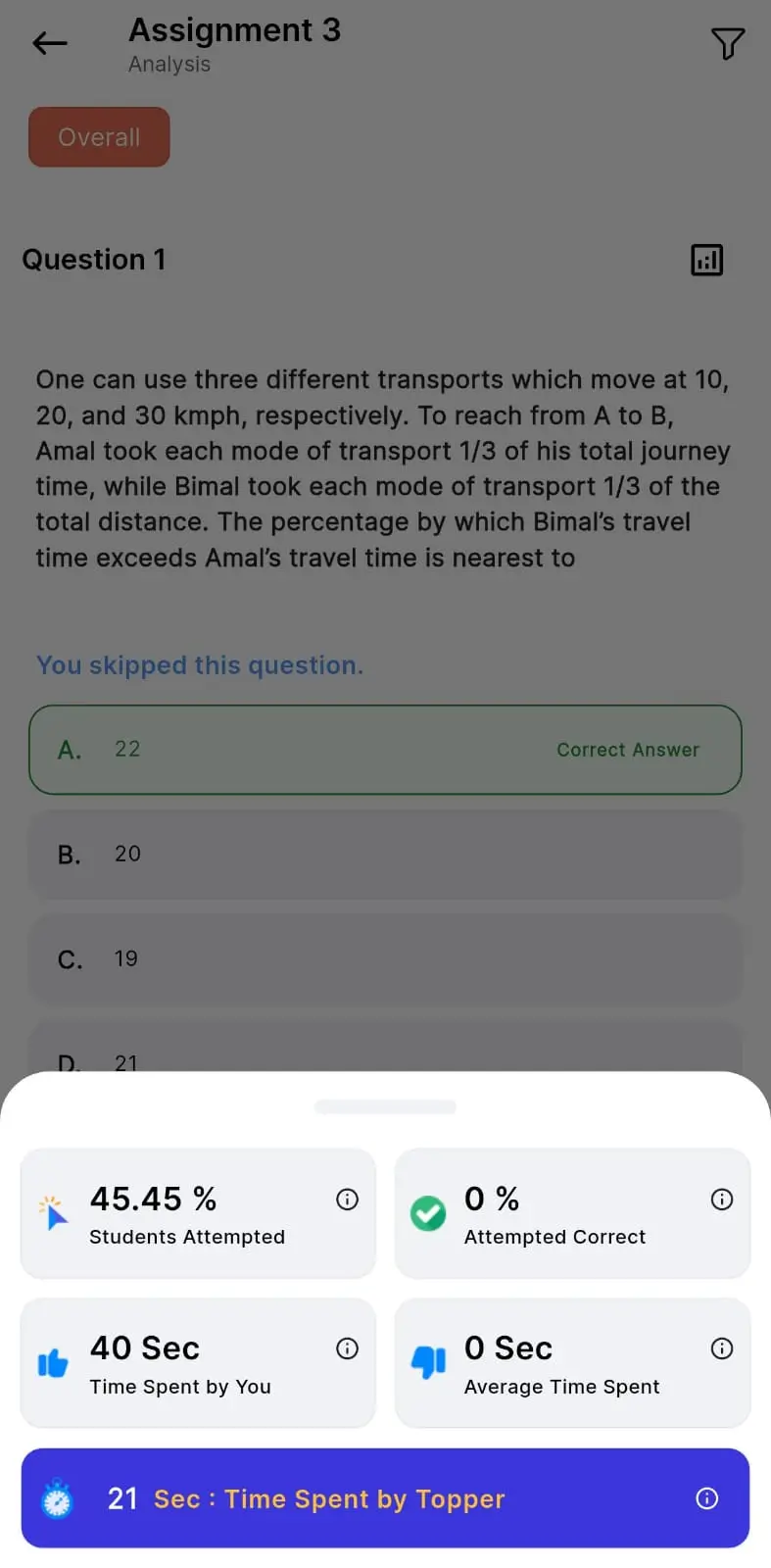
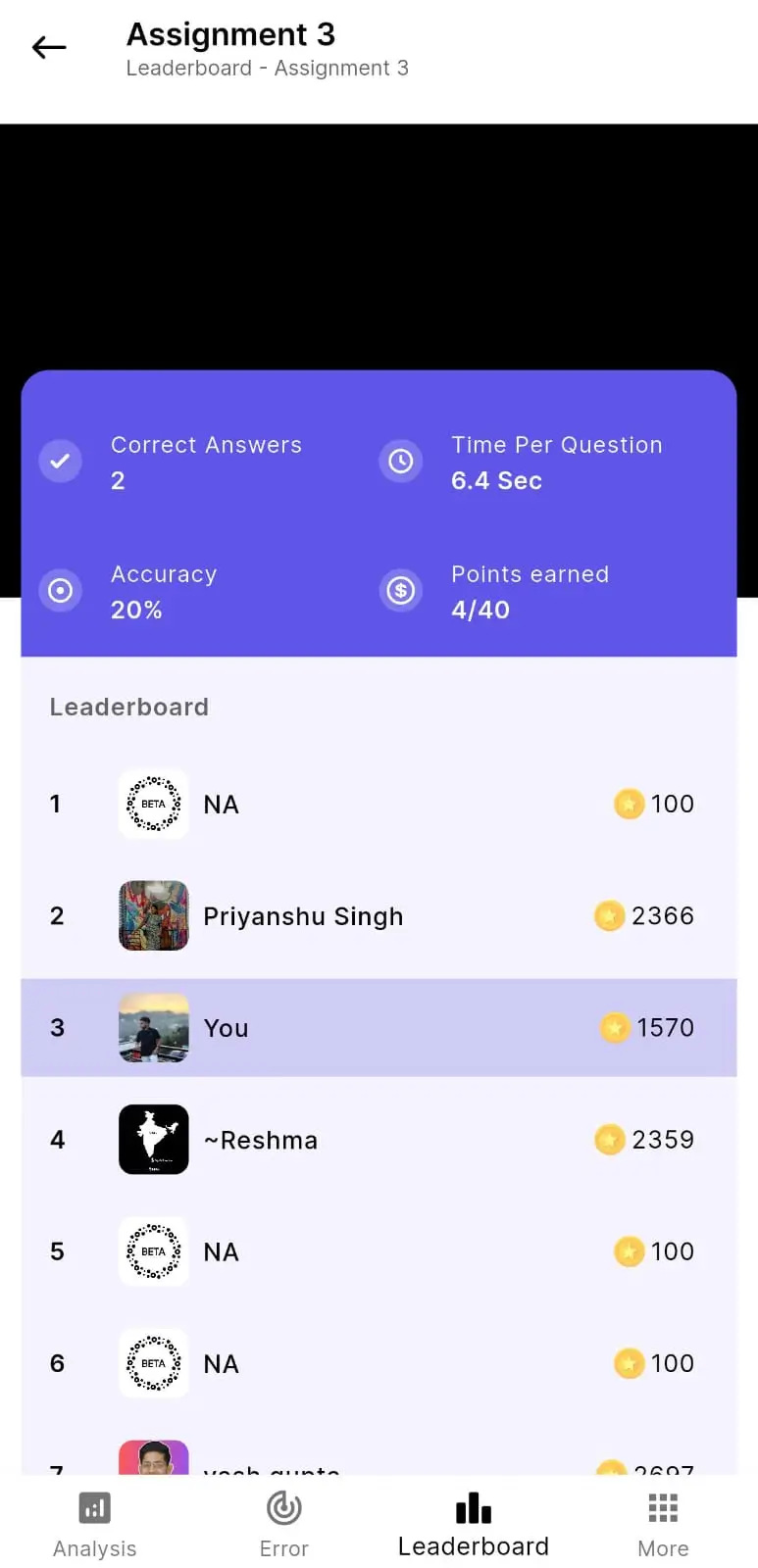
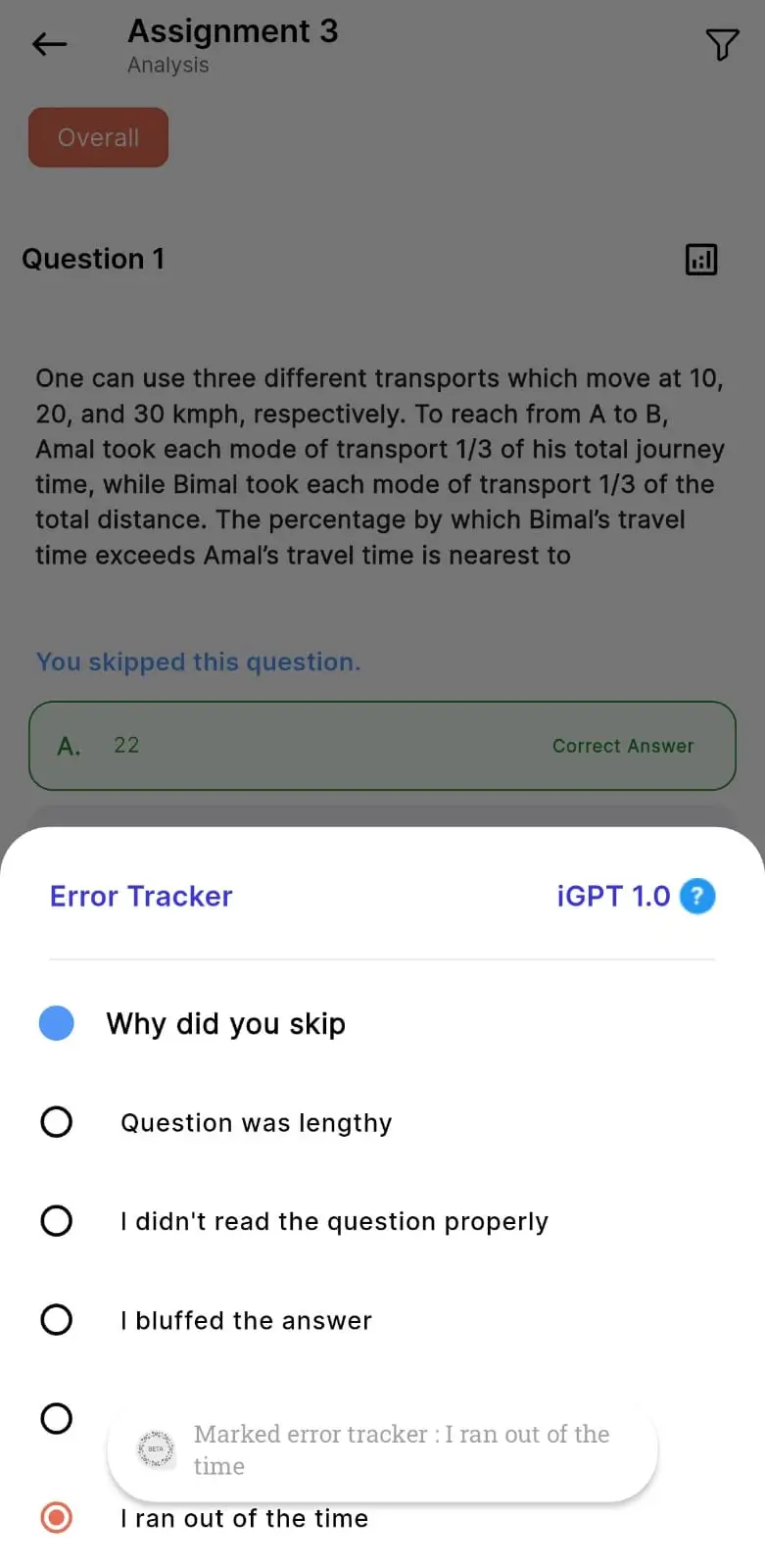
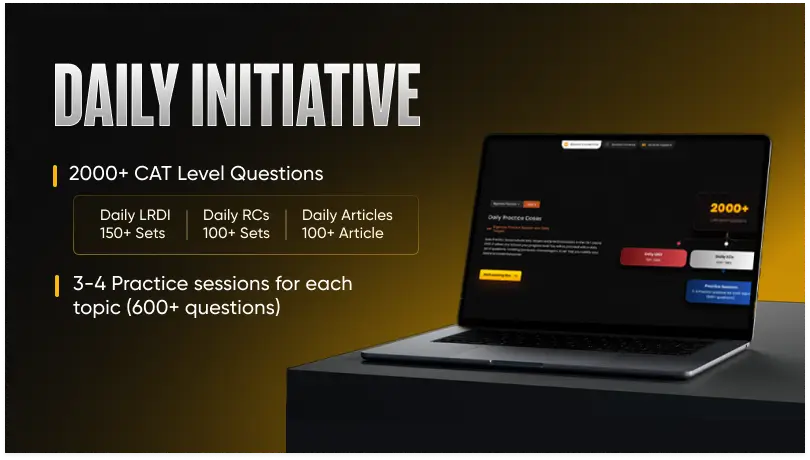
iQuanta CAT Course provides daily targets along with multiple practice sessions everyday. These are 15-30 minute quizzes covering the concepts that we have learnt in live and application classes.
Consistency builds toppers and that’s exactly what iQuanta’s Daily Practice Doses are designed for.
Every day, students get a structured set of CAT-level practice questions along with clearly defined daily targets. These cover both new concepts and previously taught topics, ensuring continuous revision and long-term retention.
Each session lets you track your progress, identify weak areas, and measure how you’re improving over time. You also get to compete with your peers in real-time, building the exam temperament that 99%ilers rely on.
Because at the end of the day, practice is the biggest differentiator between a 99%iler and a 90%iler - and iQuanta’s daily targets and practice session makes sure you’re ready to ace the CAT Exam.
If you’ve ever felt that after solving hundreds of questions you still struggle with actual CAT-level problems, you’re not alone.
The real issue isn’t you - it’s your practice material.
Most CAT books and question banks were created decades ago, when the exam pattern and logic were completely different. Today’s CAT demands aptitude, logic, and elegance of thinking - not mechanical calculation drills.
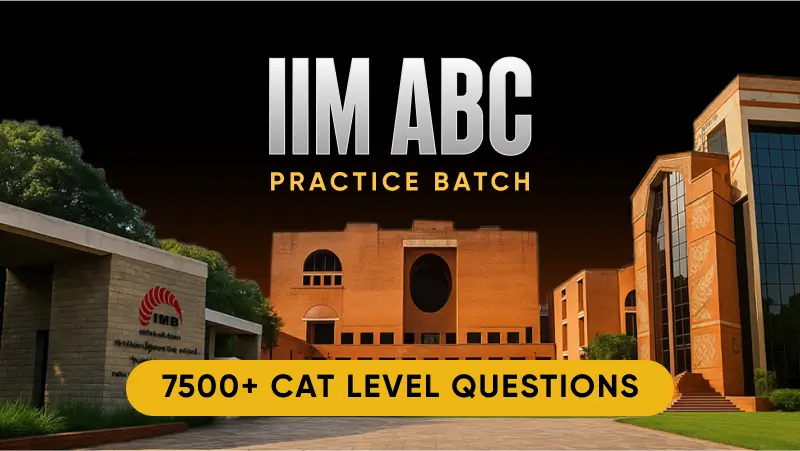
With IIM ABC by iQuanta, get access to 2500 Questions right once you enrol. In the second phase, we will be doing another 3RCs, 3 LRDI Sets and 12 Quants Question everyday.
The focus is on solving CAT level questions in a timed manner. IIM ABC is India’s only CAT Content Bank built around CAT logic and not recycled material and that is why it is trusted by thousands of CAT Aspirants every year.
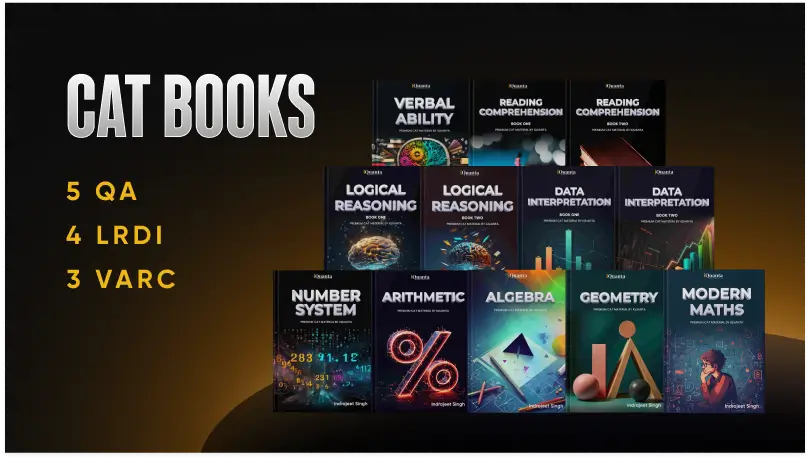
iQuanta CAT books are curated based on the updated CAT 24 format and pattern. Why did we publish books? We got tonnes of requests for CAT Books. We understand, a bunch of people require a physical book to help them practice. But, the question was how do we make our CAT books better than everything else on the market?
The biggest issue with books were they were no longer relevant to CAT Preparation as the difficulty level of the paper had increased dramatically and the pattern changes every year. So we took upon ourselves to ensure our books are refreshed every year, and the most recent changes are incorporated in iQuanta CAT Books.
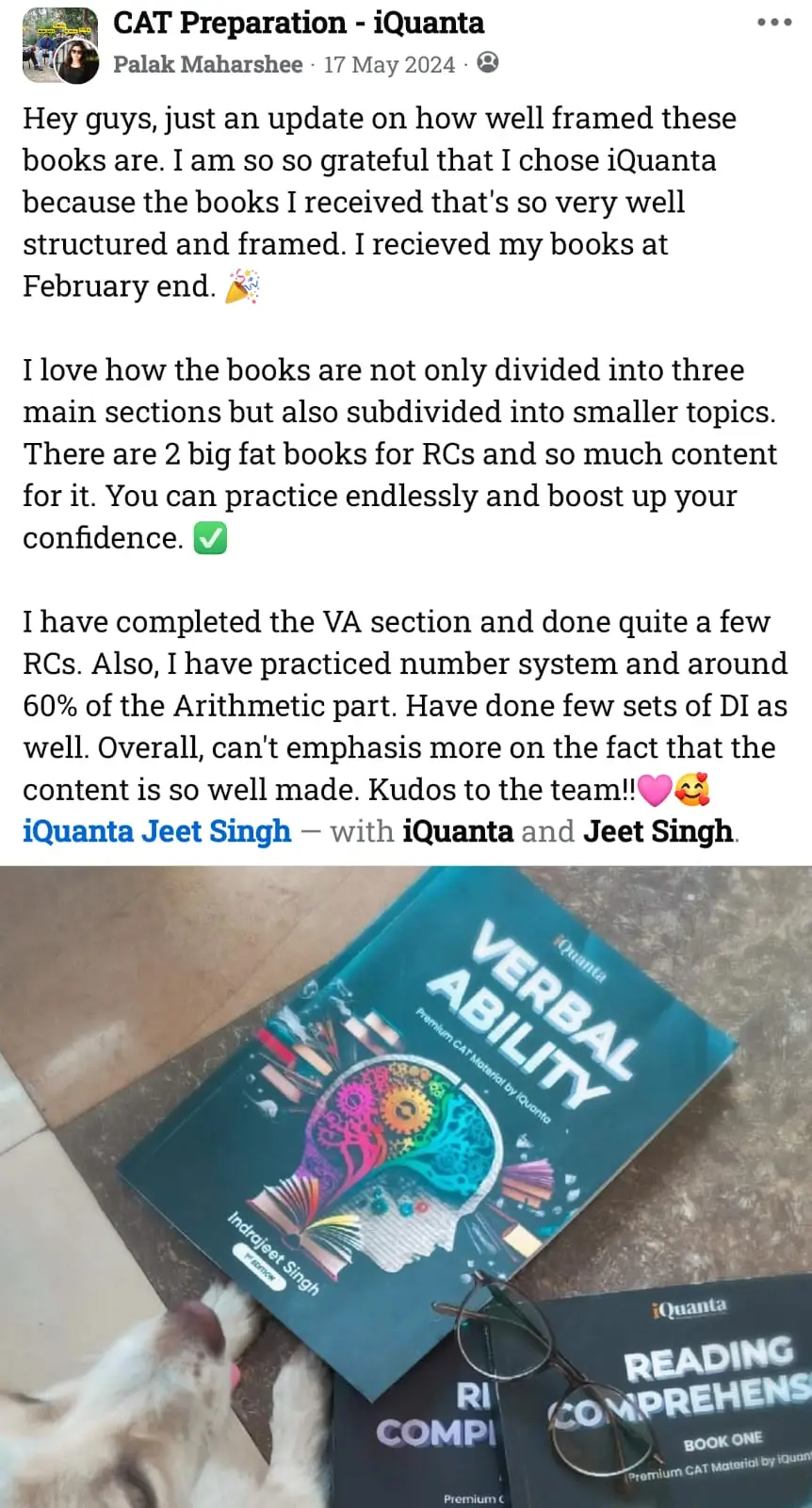
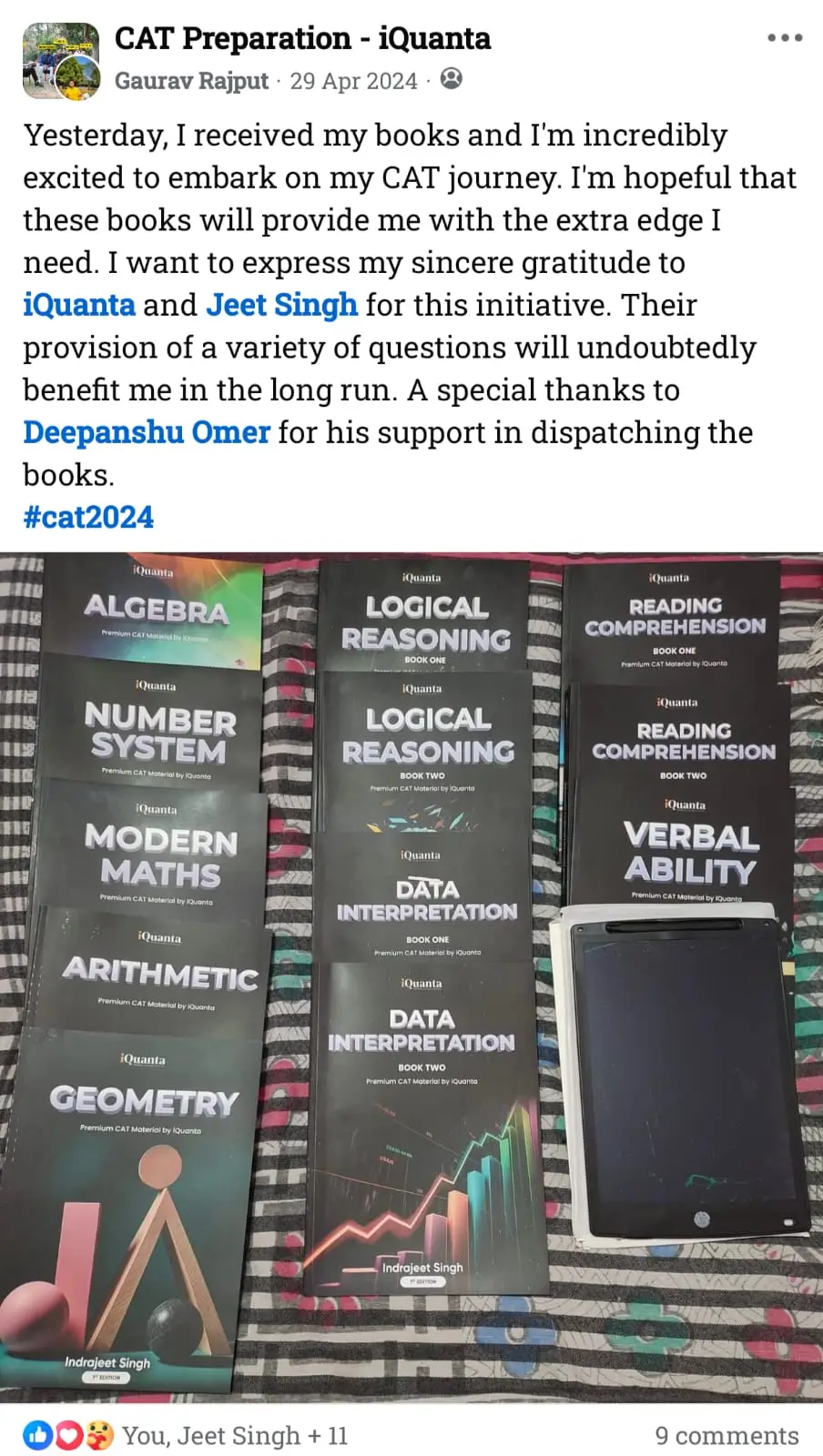
iQuanta provides 12 set of CAT Books including 5 QA, 4 LRDI and 3 VARC books with varying difficulty-level questions for each chapter and topic.
iQuanta provides 12 set of CAT Books including 5 QA, 4 LRDI and 3 VARC books with varying difficulty-level questions for each chapter and topic.



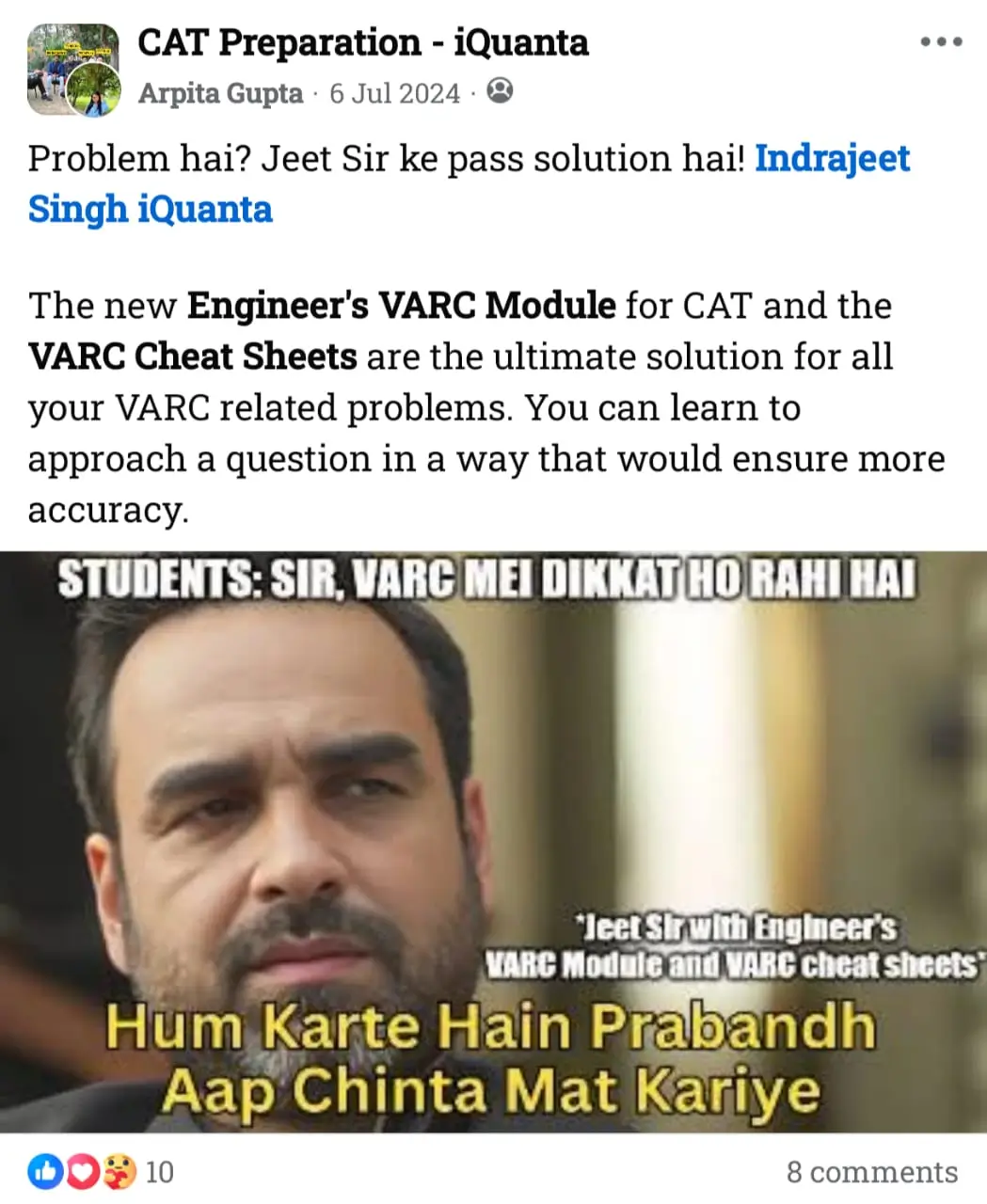
For most CAT aspirants, VARC feels unpredictable, the passages are long, abstract and the logic seems inconsistent. But withEngineer’s VARC, you’ll realize it’s actually the most structured and learnable section of all.
This module is a curated playlist of 100 Reading Comprehension (RC) passages, each selected to reflect the exact level and tone ofCAT VARC questions. It’s designed to transform your preparation from random reading to a systematic, strategy-driven approach.
100 Curated CAT-Level RCs
A handpicked collection of RC passages from diverse genres — philosophy, history, science, economics, literature and current affairs - giving you exposure to every kind of passage CAT can throw at you.
In-Depth Explanations & Expert Breakdown
Every passage comes with detailed analysis, answer explanations and expert commentary on how to think like a CAT examiner.
Proven VARC Strategies
Learn techniques for improving accuracy, time management and comprehension speed - all directly aligned with CAT 2026 VARC trends.
Verbal Ability Coverage
Includes clear, step-by-step solutions and methods for Para Summary, Odd-One-Out and Para Jumbles, ensuring complete mastery of the entire VARC section.




For most CAT aspirants, VARC feels unpredictable, thepassages are long, abstract and the logic seems inconsistent. But withEngineer’s VARC, you’ll realize it’s actually the most structured and learnable section of all.
This module is a curated playlist of 100 Reading Comprehension (RC) passages, each selected to reflect the exact level and tone ofCAT VARC questions. It’s designed to transform your preparation from random reading to a systematic, strategy-driven approach.
100 Curated CAT-Level RCs
A handpicked collection of RC passages from diverse genres — philosophy, history, science, economics, literature and current affairs - giving you exposure to every kind of passage CAT can throw at you.
In-Depth Explanations & Expert Breakdown
Every passage comes with detailed analysis, answer explanations and expert commentary on how to think like a CAT examiner.
Proven VARC Strategies
Learn techniques for improving accuracy, time management and comprehension speed - all directly aligned with CAT 2026 VARC trends.
Verbal Ability Coverage
Includes clear, step-by-step solutions and methods for Para Summary, Odd-One-Out and Para Jumbles, ensuring complete mastery of the entire VARC section.
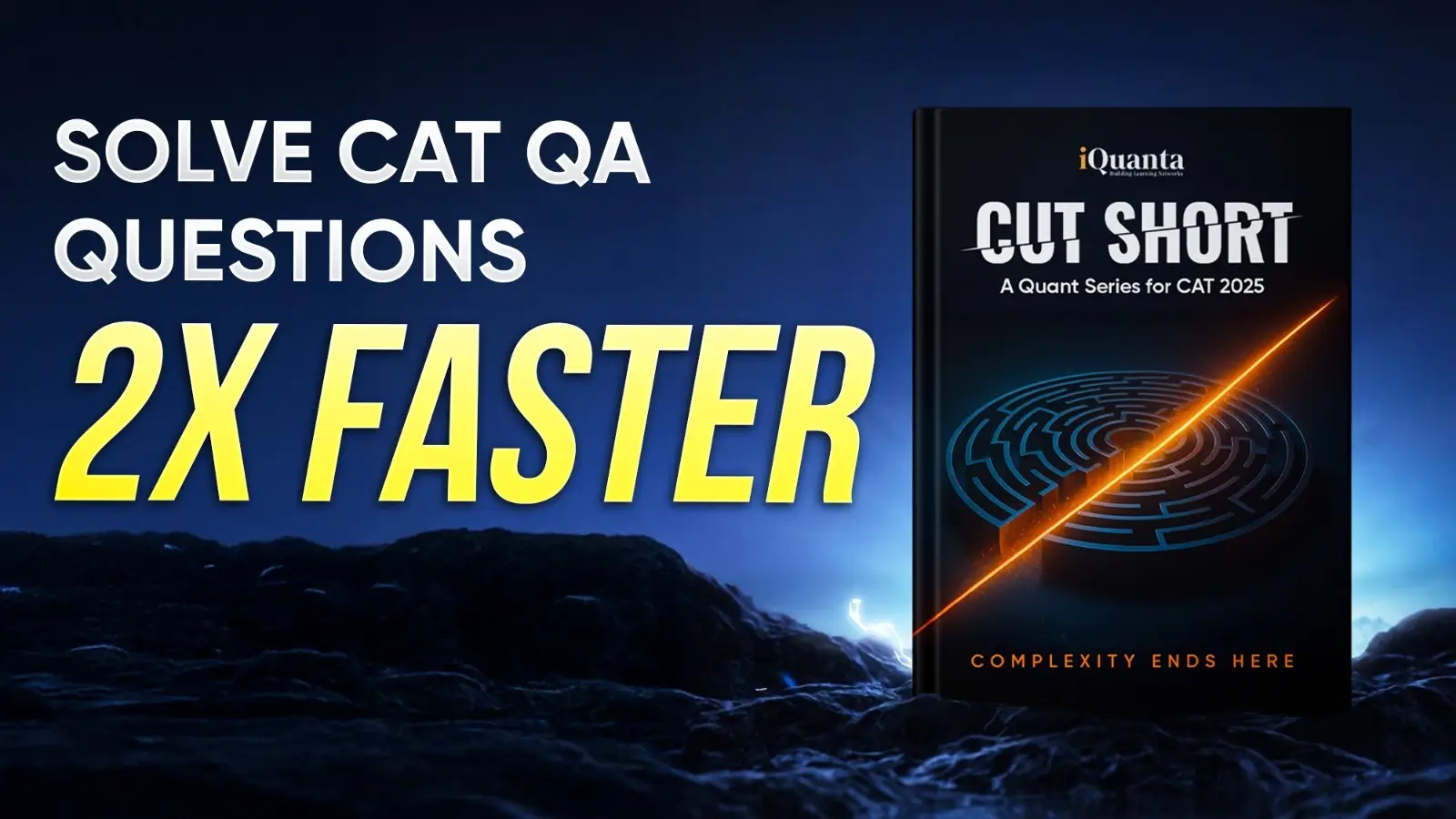
iQuanta’s Cut Short Module is one of the most powerful features of the CAT course 2026 that are not available in any other platform. It is a module that covers smart shortcuts and expert techniques to boost speed and accuracy. It helps students solve questions quickly. Join live sessions with iQuanta’s top mentors and achieve mastery in solving more questions in less time.
Master the art of solving more in less time, live sessions with the top iQuanta mentors. CutShort is a part of iQuanta CAT Full Course.



Mock tests aren’t just practice - they’re prediction tools for your real CAT exam.
That’s why iQuanta created iCAT Mocks, anAI-powered mock test platform built to mirror the exact pattern, difficulty and analytics of the actual CAT exam.
Each mock is designed with precision - helping you build stamina, accuracy and test temperament while continuously adapting your strategy based on your performance.
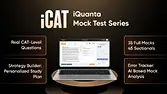
35 Full-Length + 45 Sectional Tests
Experience the real CAT environment with 20 proctoredand 15 un proctored full-length mocks. The tests are calibrated to match the actual difficulty level and topic distribution of CAT 2026. All the tests come with video solution.
AI-Powered Performance Analysis
After every mock, get detailed AI insights on your accuracy, time per question, topic-wise strengths and weak spots - all displayed in an interactive dashboard.
Score vs Percentile Predictor
Know exactly where you stand. iCAT’s AI engine estimates your percentile and even suggests which B-Schools you’re likely to convertbased on your current performance.
Video Solutions by Experts
Every mock and sectional test includes detailed video explanations to help you understand not just the “what,” but the “why” behind every answer.
Error Tracker Tool (3x Faster Analysis)
Save hours with iQuanta’s Error Tracker, which automatically logs every question you got wrong and categorizes your mistakes for smarter revision.
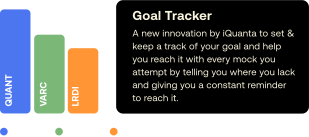
Goal Tracker + Personalised Strategy Builder
Set clear targets and track your journey toward them. The system auto-generates a custom strategy and corrective action planafter each mock - including practice questions similar to the ones you got wrong.
Because iCAT doesn’t just test you - it trains you to think like a 99%iler.
From adaptive analytics to expert-backed video solutions, every feature is engineered to make your preparation smarter, faster and result-driven.

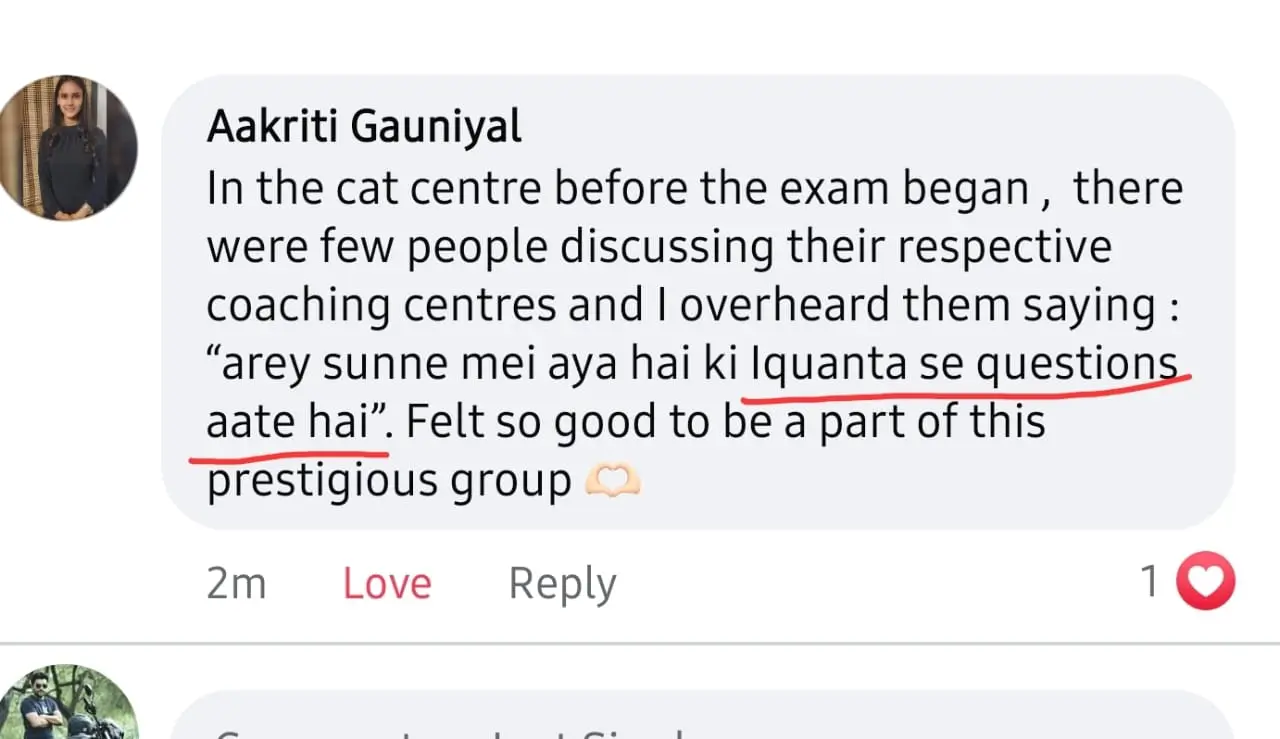
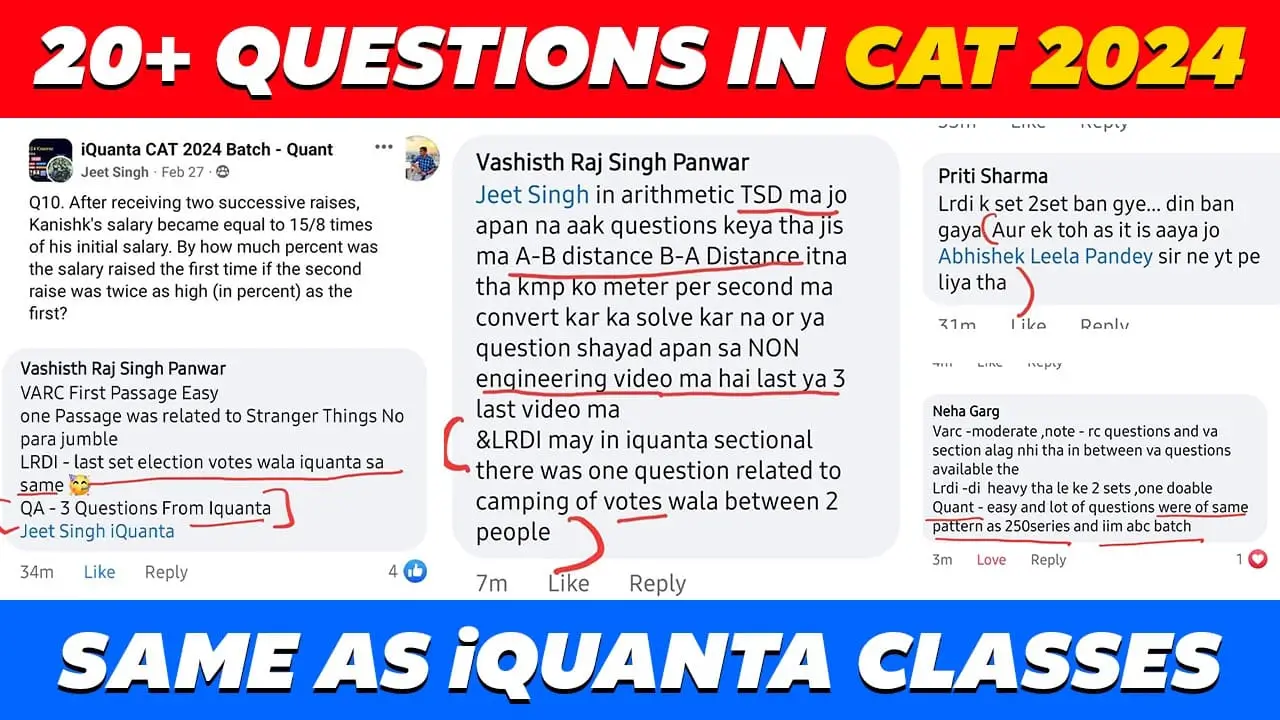
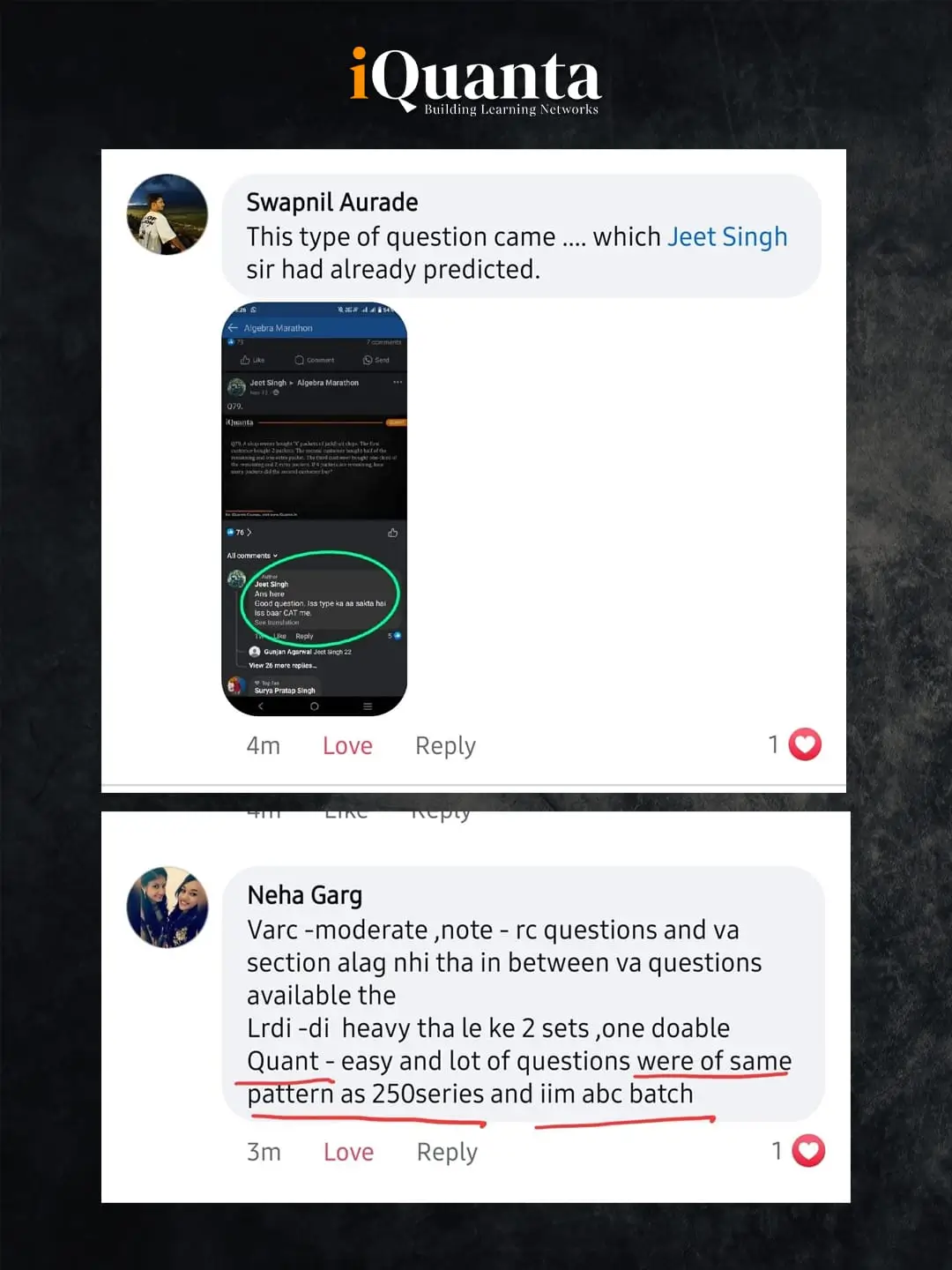
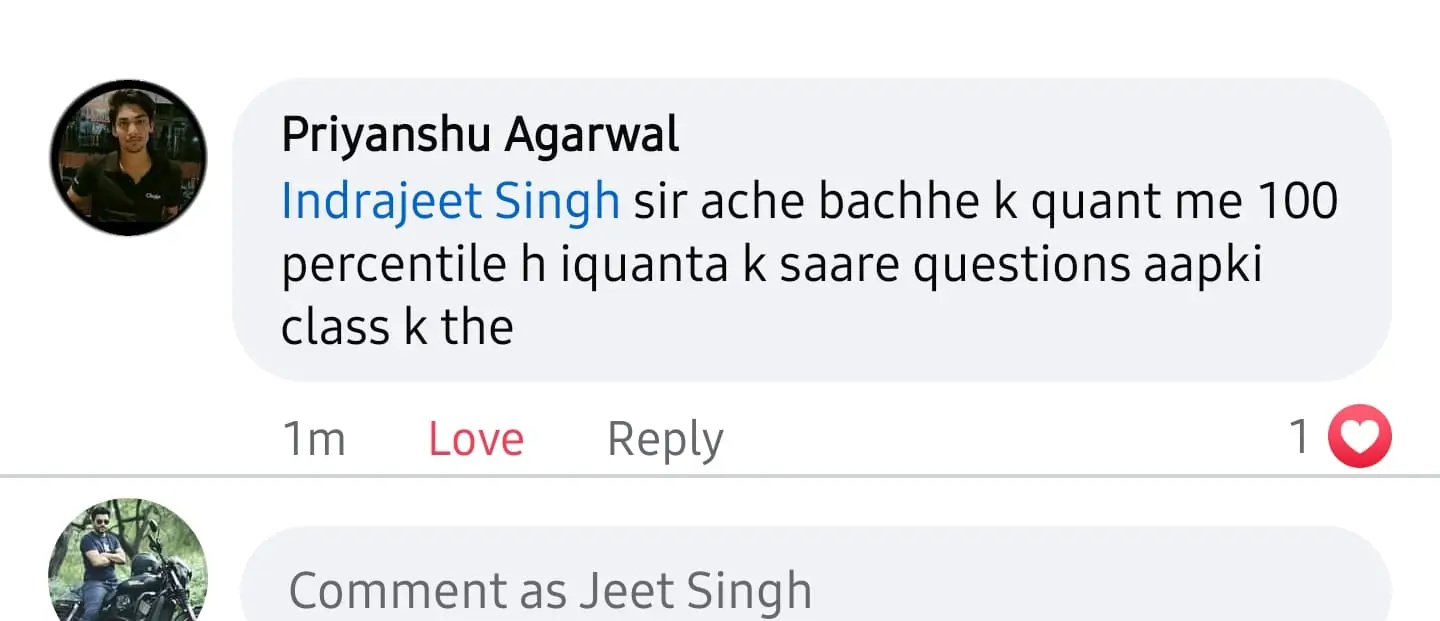
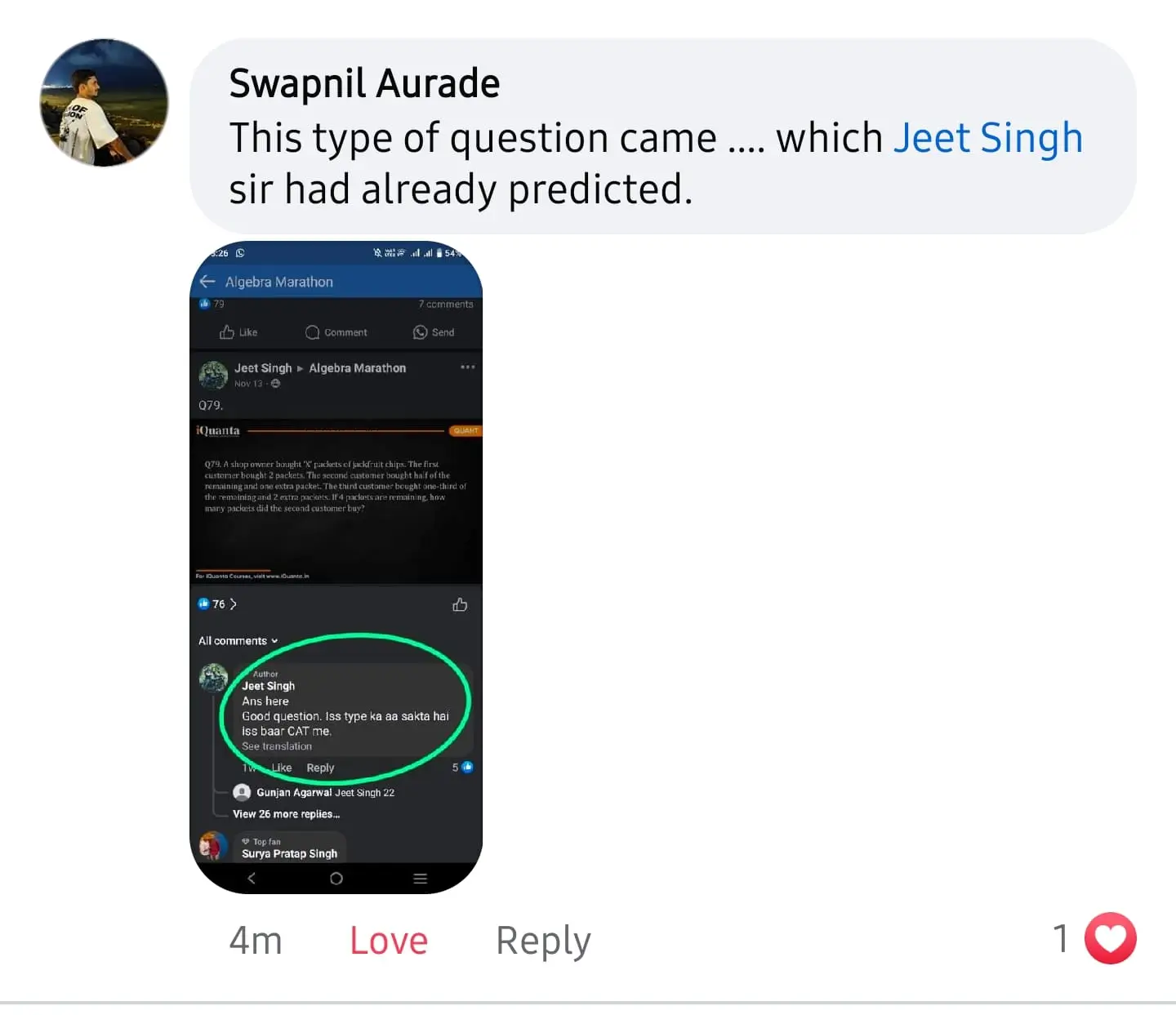
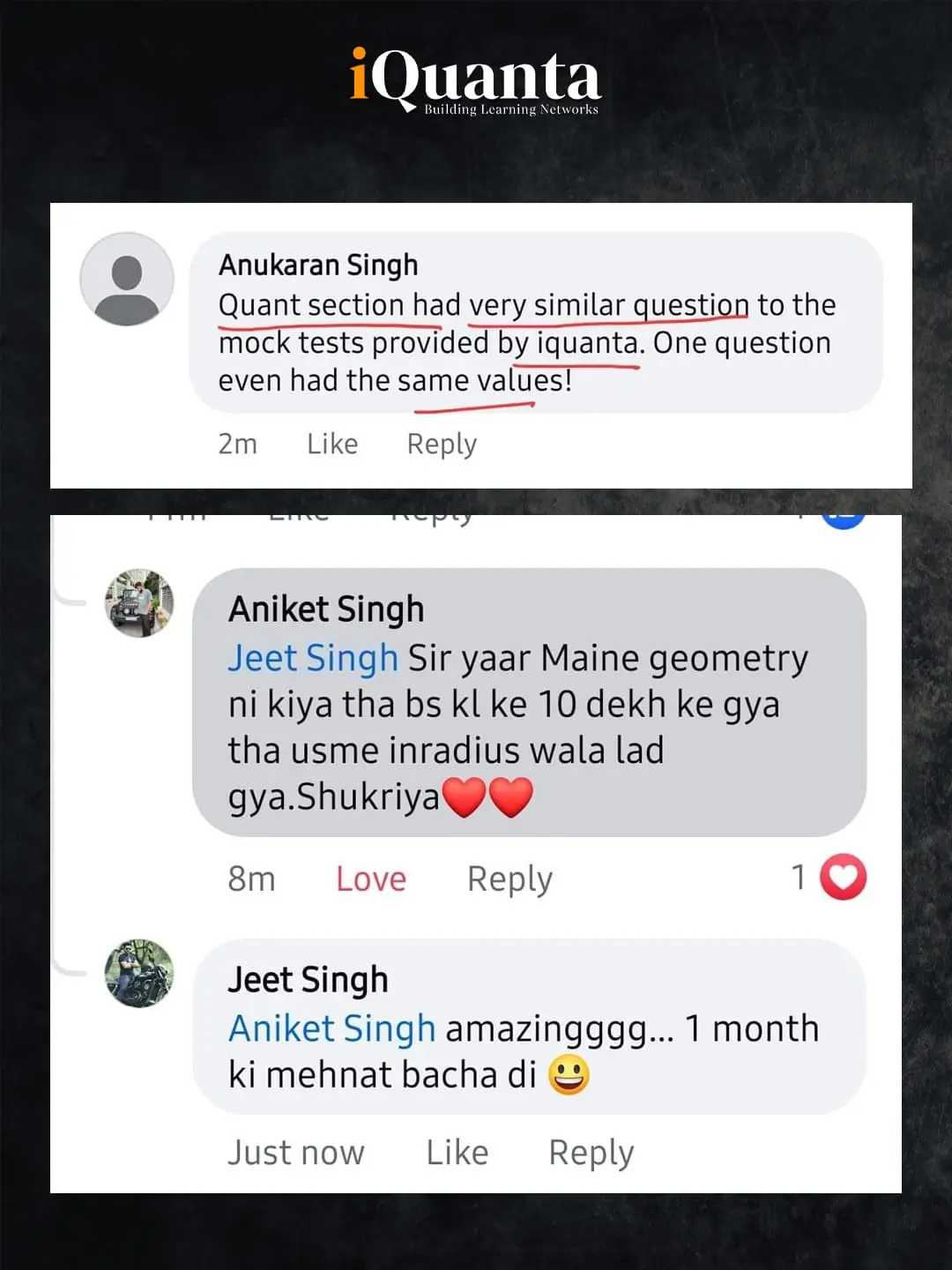
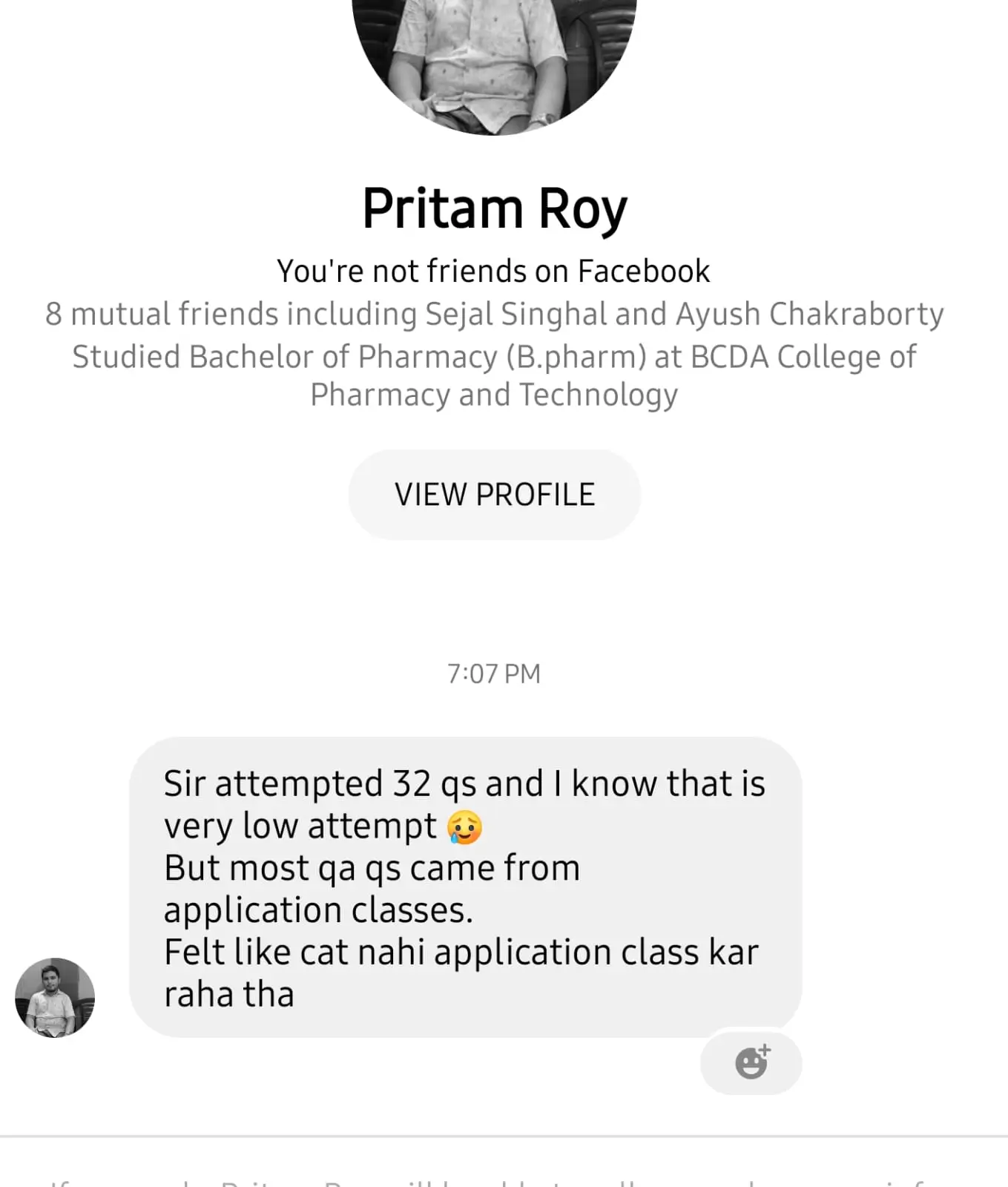
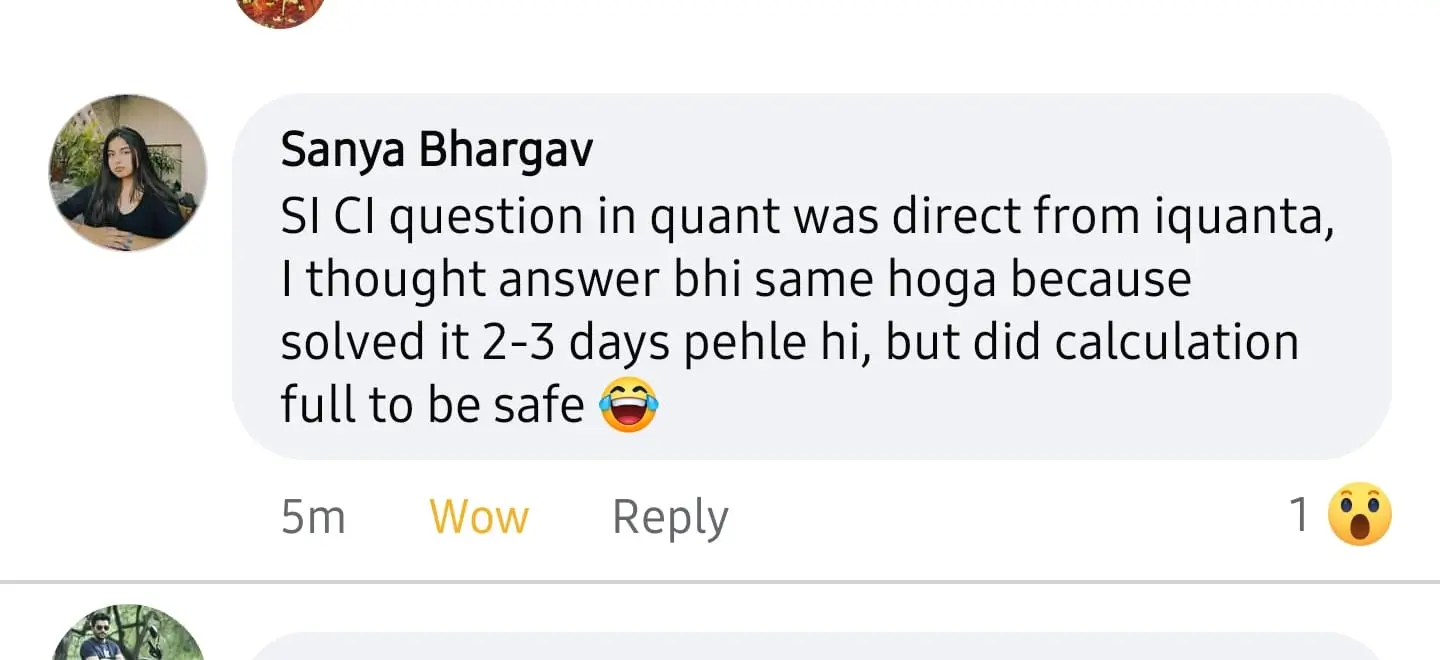

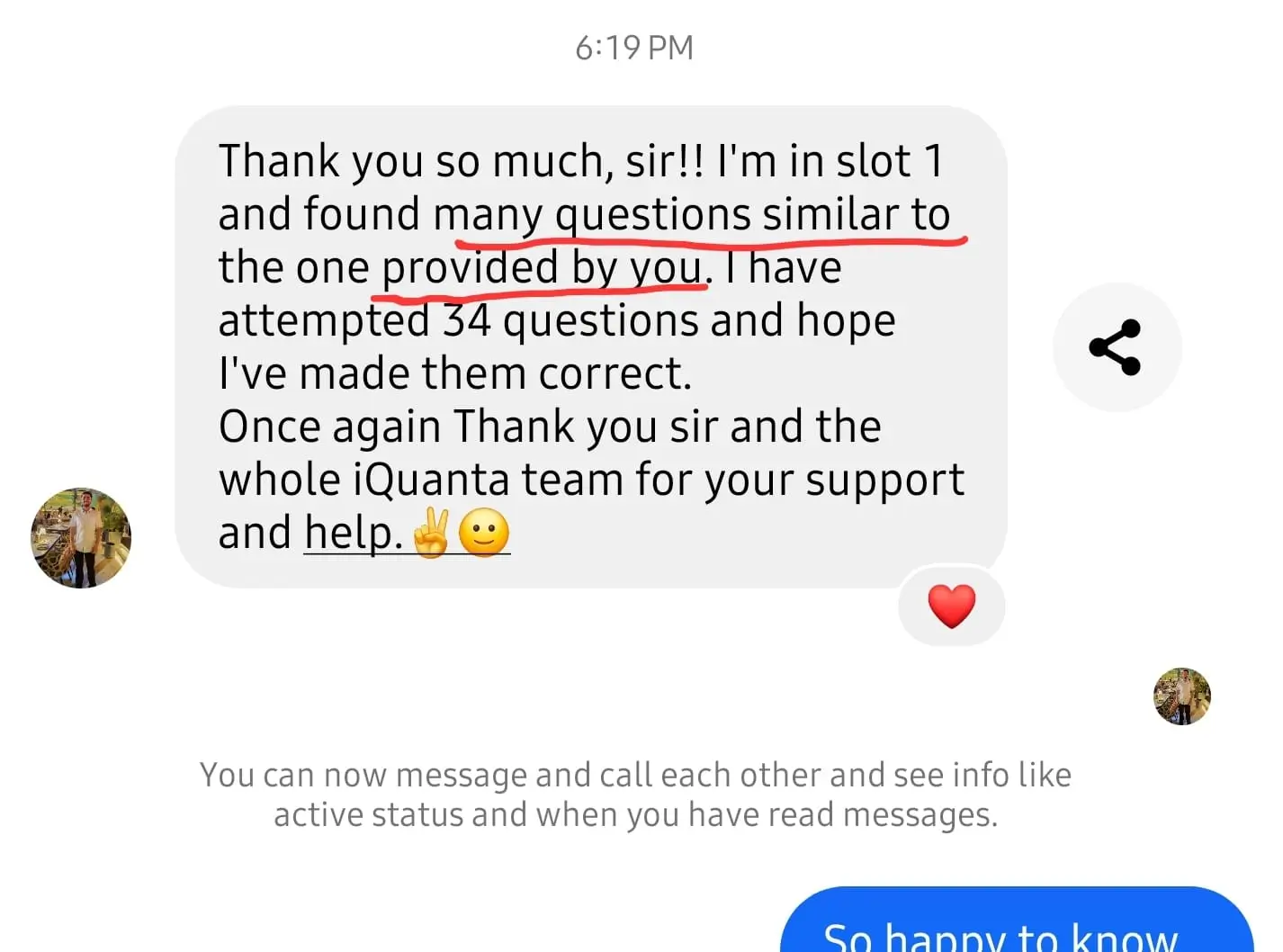
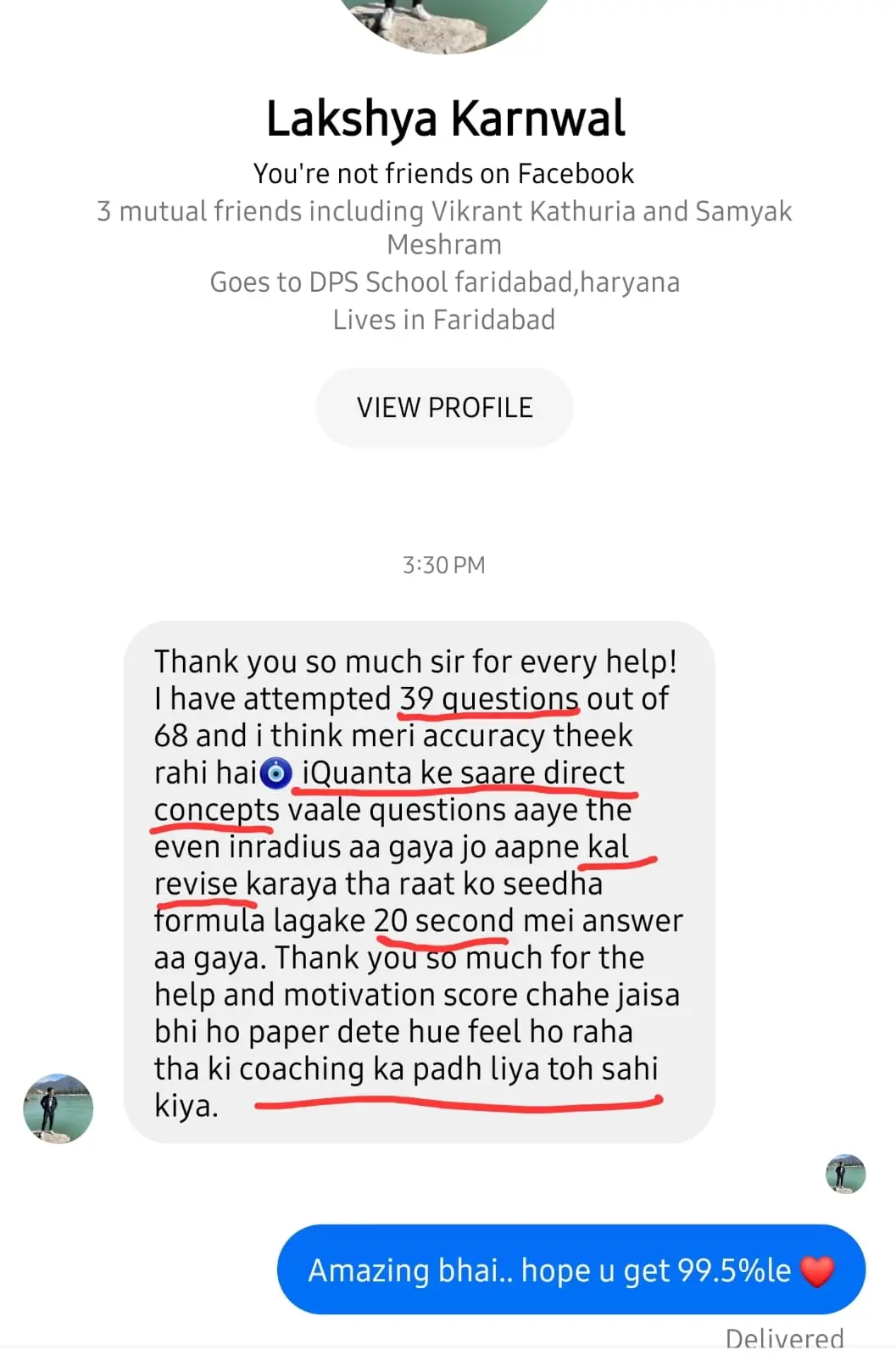
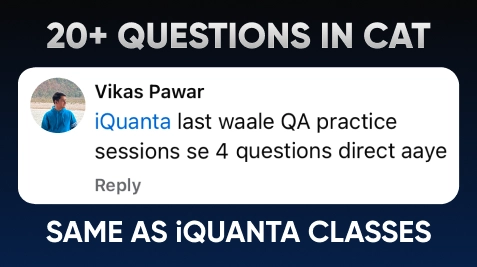
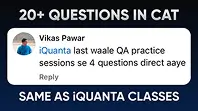
In CAT 2024, over 20 questionswere directly from iQuanta’s live and application classes.
That’s not a coincidence - it’s the result of teaching exactly what matters.
At iQuanta, every concept, question and mock is designed usingthe latest CAT exam pattern and standards. Our study material is updated continuously to ensure students prepare for what’s actually tested - not what used to be.
Because CAT isn’t just about solving everything — it’s about knowingwhat to attempt and what to leave.
When you prepare with relevant, structured, and updated content, you save time, build confidence and maximize accuracy.
And remember - in CAT, scoring just 55% can get you a 99%ile.
That’s the power of smart, guided preparation and that’s what iQuanta’s structured learning approach delivers.
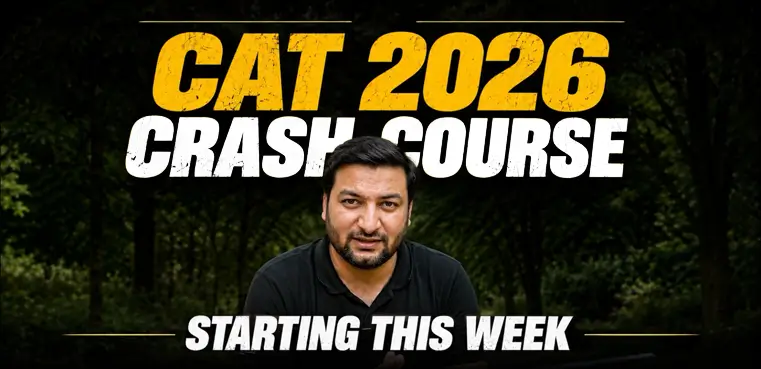
The iQuanta CAT 2026 Crash Course is designed to help you revise the entire syllabus from scratch, with special focus onhigh-weightage topics that matter most in the final exam.
This is not a summary - it’s a full-fledged revision bootcamp built to push your scores across QA, LRDI, and VARC in just a few weeks
What do you get in Crash Course?
Complete Syllabus Coverage (Re-Taught)
Every topic from Quant, VARC, and LRDI is re- taught in a fast-paced, high-retention format with special attention on high-weightage areas.
8–10 Hour Mega Marathons
Experience full-day marathon sessions for each section -VARC, LRDI and QA to maximize your speed, accuracy, and confidence.
QA 250 | LRDI 70 | RC 60
Handpicked, CAT- level question sets designed to reflect exact exam difficulty and pattern - with several direct hits in past CAT exams.
Rigorous Daily Practice
Structured practice sessions and daily live + application classes ensure consistent improvement through repetition and active learning.
35 Full-Length + 45 Sectional + 10 Non-CAT Mocks
Get real-exam exposure through full mock series withAI-based performance analysis, percentile tracking and detailed solutions.
Foundation + Advanced Recorded Modules
Instant access to pre-recorded foundation and advanced sessions, letting you revise anytime, anywhere at your own pace.
This isn’t a “last-minute course” - it’s a high-intensity performance accelerator.
The iQuanta CAT 2026 Crash Course trains you to focus on what matters the most, giving you exam-level precision and 99%ile ready preparation in record time.


Doubt Solving happens to be one of the most important feature in any CAT Online Coaching. iQuanta offers 24*7 Instant Doubt Solving. CAT Aspirants are generally either working aspirants or are in college. We therefore understand that there cannot be a set time to solve doubts. That is why we offer Instant Doubt Solving, not only from iQuanta CAT Course Material but questions from any material any time of day and night. Your CAT Preparation is not stopping and neither should your doubt solving. All doubts are answered by Top Faculties and mentors who have themselves gotten 99%ile.
Students can ask their doubts via text or by uploading an image. Once posted, it will be resolved within 15 minutes via textual format & video solution. Many positive reviews for the instant iQuanta’s doubt-solving facility provided by students. All the enrolled students receive solutions to their doubts and queries within 15 minutes in the secret groups. All the doubts are cleared within 20 seconds during the live classes.
iQuanta 24x7 Doubt Solving Features:
Not Limited to iQuanta material: You can ask your doubts from any study resources or material that you are using for the CAT 2026 preparation. Doubt-solving support is not limited to iQuanta material/books.
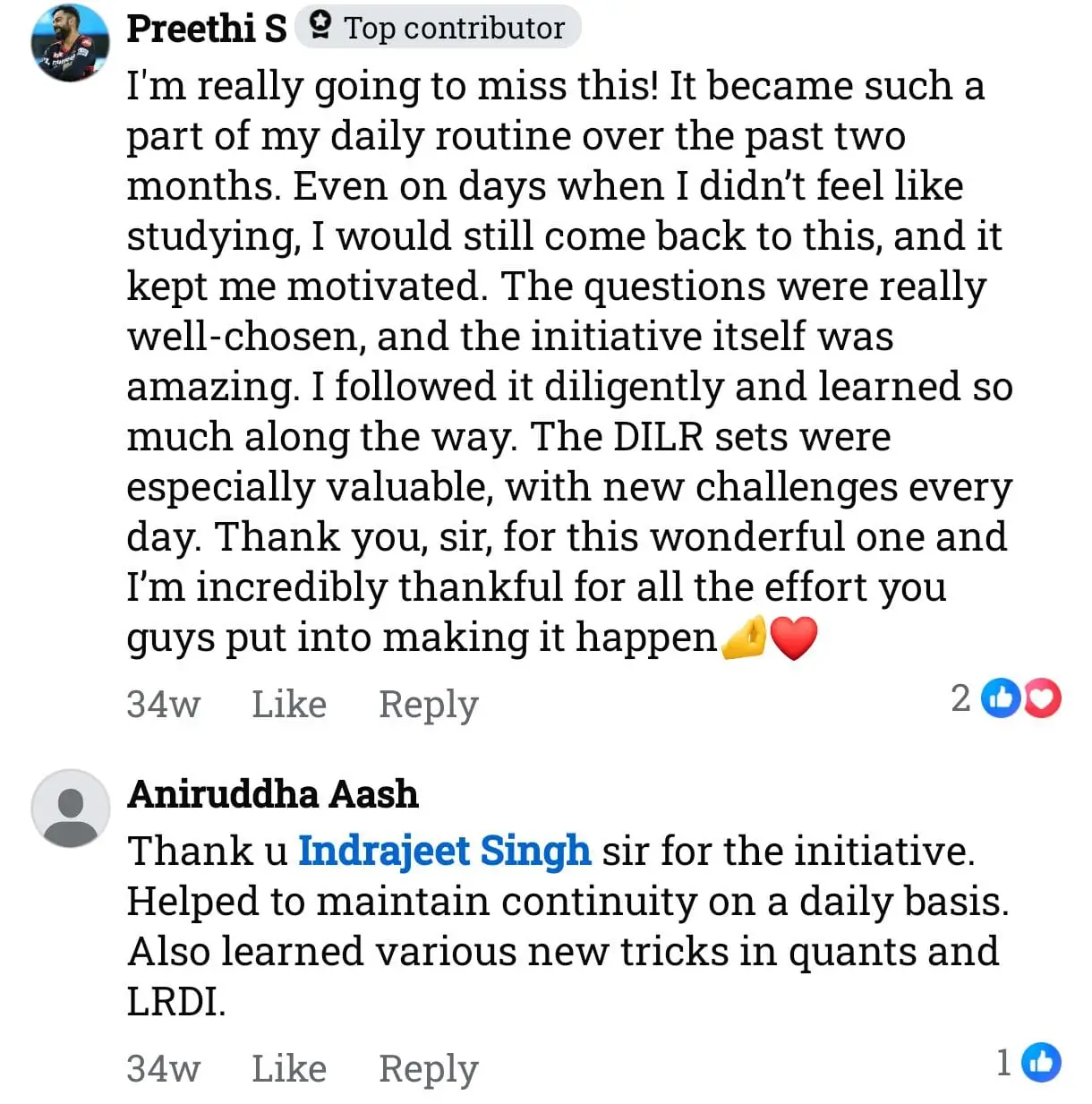
Mentor Support: You can post your doubts anytime and get them resolved from the student community and mentors. This showcases personalised guidance and supportive community throughout your preparation. The Wizard of Quants - Indrajeet Singh himself guides the CAT aspirants in the iQuanta CAT preparation community.
24x7 doubt-solving in classes: You can ask your doubts during the live and application classes of the iQuanta CAT course. You don’t have to wait for a certain timeframe or for the class to end. You can clarify your doubts anytime with the teachers.
The right expert guidance can uplift your CAT preparation and build your confidence throughout the journey. At the iQuanta CAT course, we provide access to some of the top CAT mentors who are not only familiar with the exam requirements but also understand the dedication it takes to truly excel. The mentors aim to offer conceptual clarity, proven strategies, and personalised support to make your preparation productive and focused. They are:
Indrajeet Singh (Founder & CEO)
Raj Kumar Jha (6 times CAT QA 100%iler)
Shabana Ma'am (CAT VARC, 99.5+%iler)
Kamal Lohia (QA, LRDI Expert CAT 99.99%iler)
Prashant Chadha (9 times CAT VARC 99%iler)


Founder & CEO Wizard of Quant

CAT 99.99%iler QA, LRDI Expert

6 Times CAT QA 100%iler

CAT VARC 99.5%iler

CAT & XAT QA 99.9%iler, LRDI Expert


MBA stands for Master of Business Administration, a qualification that has shaped countless corporate stories worldwide. Providing more than a degree, an MBA means you possess modern business knowledge, practical skills, and the determination to succeed in scaling a business. The MBA program builds expertise in key areas of management such as Finance, Marketing, Operations, Systems, and Human Resources. It opens new career opportunities and provides the tools and skills essential for success in today's corporate world.
As markets expand and opportunities multiply, the demand for skilled and qualified management professionals is higher than ever. If you're aiming to boost your career, earning an MBA from a top business school can be your gateway.
Here are the key reasons why many choose to pursue an MBA:
Top IIMS
(On a rotation basis)
21 IIMs, FMS, MDI, SPJIMR, 1200+ other B-Schools

IIM Ahmedabad

IIM Bangalore

IIM Calcutta
The CAT Exam is divided into 3 sections, spanning 40 minutes each, making it a 2-hour exam
QUANTITATIVE ABILITY
VERBAL ABILITY & READING COMPREHENSION
LOGICAL REASONING & DATA INTERPRETATION
Question Type: Objective (MCQ) & Non-MCQ (TITA - Type In The Answer)
MARKING SCHEME: Each Correct Answer = +3 Marks | Each Incorrect Answer = -1 Mark (only for MCQ type)
| EVENTS | CAT 2026 DATES |
|---|---|
| CAT Exam Notification | 4th Week of July 2026 |
| CAT Exam Application Process Starts | 1st Week of August 2026 |
| Last Date To Fill CAT Exam Application | 2nd Week of September 2026 |
| CAT Exam Admit Card Release | Last Week of October 2026 |
| CAT Exam date | Last Week of November 2026 |
| CAT Exam Response Sheet | 1st Week of December 2026 |
| CAT Exam Result | Last Week of December 2026 - First Week of January 2027 (Expected) |
Required minimum graduation score to appear in CAT
For General/OBC
For SC/ST/PwD candidates
Final year bachelor's degree candidates or those awaiting their result are also eligible to appear for the CAT exam.
Candidates with professional qualification such as CA/CS/ICWA can also appear for CAT.
10th or 12th scores do not affect the CAT Eligibility
| THE MOST IMPORTANT TOPICS (in terms of weightage) | |||
|---|---|---|---|
| Topic | 2022 | 2023 | 2024 |
| Average, Ratio, Mixture & Alligation | 3-5 | 4-6 | 3-5 |
| Profit & Loss, SI CI, Percentages | 1-3 | 2-3 | 2-3 |
| TSD & Time and Work | 3-5 | 2-3 | 2-3 |
| Geometry | 3 | 3 | 2-3 |
| Quadratic, Polynomials & Simple Eq | 1-3 | 3-4 | 1-2 |
| Progression and Series | 1-3 | 2 | 1-2 |
| Inequalities, Modulus & Functions | 3-4 | 1-2 | 1-2 |
| Logarithm, Surds & Indices | 0-1 | 1-3 | 2 |
| Probability and P&C | 1 | 1 | 0-1 |
| Number System | 1 | 1-2 | 2-3 |
| Venn Diagrams | 0 | 0 | 0 |
| Reading Comprehension Genre | Verbal Ability |
|---|---|
| Science & Tech. | Para Summary |
| Business & Economics | Para Completion |
| Arts, Society & Culture | Odd One Out |
| History & Politics | Para Jumbles |
| Philosophy & Psychology | |
| Mixed |
| Topics | Weightage |
|---|---|
| RCs | 16 Questions (4 sets) |
| Para Summary | 3 Questions |
| Para Jumbles | 3 Questions |
| Odd One Out | 2 Questions |
Assuming this year's CAT will be of 2 hours, and hence there will be 16 questions on RC, which is 70% of the total VARC questions. This is a section which checks your comprehension the most, and not the vocabulary or the grammar. The first step towards comprehension is how you can retain what you have read. The best way to exercise your mind is to start reading articles from reputed newspapers and summarise it in your mind. You can start reading English newspapers like The Hindu or Economic Times, or online articles on Aeon or Al-daily to get used to reading long passages. But for your rescue I have provided multiple Genre wise articles from those sources from where CAT has been giving RCs in recent years with Summary. People who read a lot of novels or just like reading in general will have a head-start in this section, but with some dedicated reading practice, you can cover this gap in a few months.
Read 1 to 2 articles from the 250 Genre wise Reading Articles by iQuanta. You will get at iQuanta’s CAT Preparation Study Material. Check the Reading Materials Section there.
All you have to do is read at least 1 article daily, from any genre you want to get comfortable with. Practice 3 RCs per day, for which you can use CAT Past Year Questions. Supplement it with iQuanta CAT Course, VARC Section.
At the end of 2 months you'll be able to retain the majority of the points from the article and that if complemented with past papers practice is well and good.
I will suggest to follow the most conventional approach i.e. I always read the whole passage before looking at the questions. Some people read the first couple of paragraphs and then simultaneously start solving the questions. Others also first look at all the questions and then start reading the passage. For yourself, you can try all these 3 methods in the mocks and choose the one which suits you best. The most important step is absorbing and understanding what you read. Many times, when the passage is long, you'll find after reading half the text that you've already forgotten everything and need to start again. This wastes a lot of time. Even while attempting the questions, you can't revisit the whole paragraph every time. To overcome this issue, you can note down the important highlights of the paragraph while reading. This will help formulate a better structure of the content in your head and help you recall which point is mentioned where. Although, this method is advisable only in the early part of preparation. As you get used to reading and retaining long paragraphs, you will no longer need this trick.
There will be a few easy questions in which you can directly pick the correct option by reading the paragraph. Other than that, most questions in RC are very confusing with similar looking options. The first rule for solving such questions is that you leave all assumptions behind. The topic of the RC might be familiar to you, but you have to disregard everything you know while reading it. Whatever the author writes is the truth and you've to follow that only. Always read the question very carefully.
For example, consider the following paragraph:
There are 4 friends in a class. Indrajeet got 90, Sunny Rathore got 75, Lakshay got 60 & Akshat Gupta got 45.
Q. Who got the 2nd lowest marks in the class?
There are many of us who would choose Lakshay as the answer because we are in a hurry and careless. But we made this assumption that we are only considering only these 4 friends and not the entire class. So the answer is None of these. These kinds of mistakes have a very negative impact on your score. So always make sure you understand what the question is asking.
Now, the most reliable way to solve the RC questions, in my opinion, is the method of elimination. In most questions you'll be able to eliminate two options and be left with two. In these cases, I'd suggest you always go with your gut feeling and choose one of the two options. Another important point here is that during analysis of such questions, do read the explanation behind the answer irrespective of whether you got it right or wrong. If the other option, which you had not eliminated is the correct answer, then you were at-least half-correct and you can take some confidence from it. But, if you eliminate the right answer at the beginning itself, then you are either not reading the question carefully or not understanding the passage completely or both. If this happens frequently, then you need to keep working on your reading skills.
If you’re scoring low in RCs, then don’t worry too much right now. You'll have time to get used to it and you’ll improve only with practice. There is no shortcut which will suddenly increase your marks in tests. I can’t stress enough how important it is to read the question and the explanation of the answer carefully; the latter step is obviously your analysis part. For practice, you can again follow any test series of your choice and also give sectional tests.
iQuanta’s Engineer’s Module for those Extremely Weak in English and Grammar
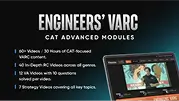
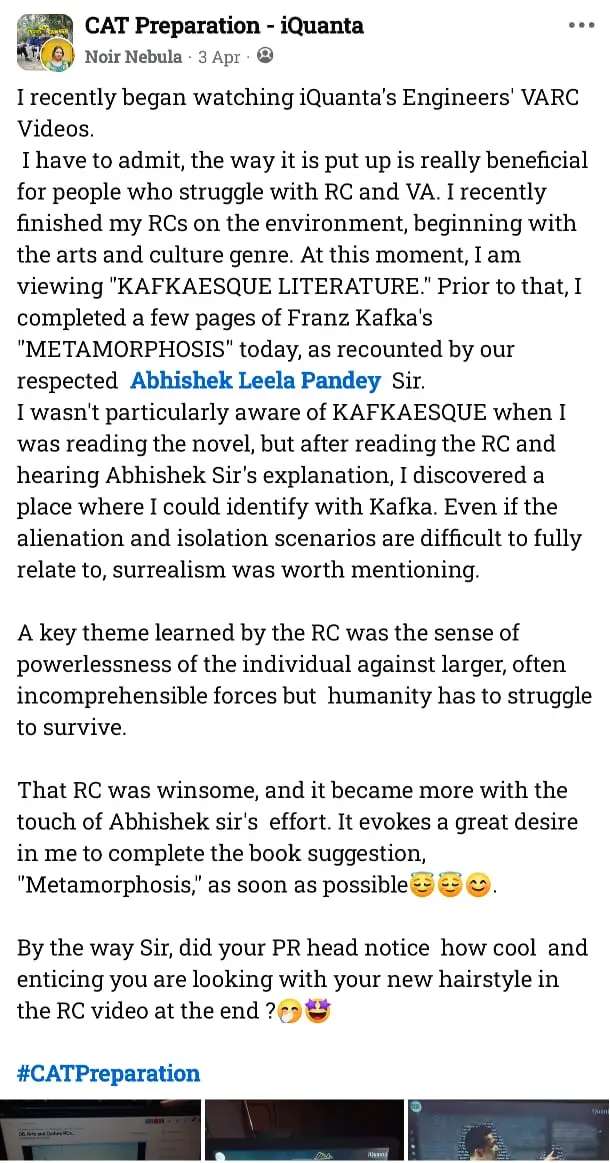
The VARC Engineers module has video lectures on all the topics of the VARC section. So, if you think you are someone who is struggling with grammar and other communication-related issues, then this is for you. This module has been exclusively designed for students who are weak and are starting their preparation journey towards CAT. It contains a total of 40 videos on RC, 12 CAT VA videos with 10 VA questions, 7 strategy-based videos to attempt tricky questions. Apart from these features mentioned above, you also get access to 60+ videos with 30 hours of VARC niche content, curated only for CAT.
We will have 32 Application Sessions in VARC. 20 of the sessions are focussed on RCs. Apart from that there will be 20 Conceptual Live sessions. In Each Application RC Session we do 4 or 5 Reading Comprehension passages with 2-3 detailed video solutions ( 20 minutes each) and 2 detailed textual solutions. This happens along with instant doubt clarifications in the class.
We also have regular practice sessions on RCs. Special focus in RC is on elimination of incorrect options.
[In case you want all RCs to practice at once, you can opt for iQuanta IIM ABC Course too, which has 500 RC Sets with detailed solutions.]
VA - 12 Sessions on VA with more than 60 videos in CAT Course. This is complemented by 100s of practice questions on VA along with explanation and doubt clarifications. 3-4 months of rigorous practice is followed by Mocks and Practice sessions. 20 mocks brings us to a total of 100 RCS in addition to 50 RCs in sectional tests.
The Crash Course (which is free for full course students) - we focus on CR and RCs again with an enhanced speed. We will have 30 Video Passages along with 25 RCS. In the span of 2 months in the crash course - we cover 75 more RCs. We also have an RC initiative by iQuanta where we create the best quality original RC sets.
In total we will cover 260+ RCs and around 500 VA Questions in class.
Final Tip for CAT VARC: Try and read for 30-45 mins - can be articles, newspapers etc. After some time when you feel comfortable start with the Past CAT RC Practice, which along with the iQuanta Explanatory RC Videos and rigorous practice will be enough to fine tune, and enhance your comprehension which if done well can easily get you a 99%le in CAT 2026.
All this comes with 24*7 doubt-solving assistance. The important part is to start now. All these are included in CAT 2026 Full Course by iQuanta, you can be a part at www.iQuanta.in. The CAT 2026 Batch of iQuanta is starting soon
iQuanta CAT 2026 Course Structure & Details: (New Batch starting)
This blueprint is designed exclusively for serious CAT aspirants targeting a 99.5+ percentile in the CAT 2026 exam. It demands rigor, consistent practice, and a smart, disciplined approach to preparation.
The most effective strategy is a streamlined loop built on four pillars:
The key to QA success is extensive, concept-driven practice. Use any standard, quality material (e.g., CAT Hardcopy Material or IIM ABC CAT Material by iQuanta). Supplement this with questions here: Free CAT Preparation Study Material.
The practice philosophy: Build Concept → Practice → Clarify Doubts → Note Learnings → Repeat.
Focus on Arithmetic & Algebra (7–8 questions). Master these first, then Geometry, Numbers, and PNC. Aim for 1000+ Arithmetic questions. Also solve random group questions to simulate CAT unpredictability. Past papers here: CAT Previous Year Questions.
LRDI is all about CAT-type set familiarity. Solve 300-400 CAT-level sets to confidently crack 50% of exam sets, enough for 99+ percentile.
Begin with basics from the LRDI strategy guide: CAT LRDI Strategy. Then move to CAT Past Papers (2000–2014) and later higher-level sets in mocks or material. You can practice past papers here: CAT Previous Year Questions.
Quick tip: Know squares, reciprocals, and percentages to speed up calculations.
VARC heavily tests comprehension (RC = 70%). The first goal is improving retention. Read articles from Aeon, Arts & Letters Daily, The Atlantic, etc. Summarize key points mentally.
Practice from past papers here: CAT Previous Year Questions.
Do 2 RCs daily, increasing slowly. For VA, practice questions without options initially. Build vocabulary through understanding context, not memorization.
CAT 2026 preparation consists of five phases - Foundation (Feb–May), Assessment & Refinement (May - Aug), Mock Season (Jun - Aug), Acceleration (Sep), and Peak Performance (Oct - Nov). Each phase focuses on concept building, mocks, revision, and final optimization.
Doubt Resolution: Use online platforms to clear doubts quickly and maintain a detailed cheat sheet.
Mocks: Take two mock series (e.g., iQuanta iCAT + another). Do not start mocks before covering basics.
Competitive Environment: Solve group questions quickly - aim to be the first. It builds speed + decision-making.
If you want a complete course, check the CAT 2026 Course: iQuanta CAT 2026 Course.
Remember: Obsession beats talent. Consistency beats ability. Constant work beats skill.
Logical Reasoning and Data Interpretation (LRDI) is often considered the most challenging section of CAT. Achieving a 99th percentile requires a systematic approach, focused practice, and mastery of set selection.
Familiarity and Set Selection
The key to cracking LRDI is gaining familiarity with CAT-type LRDI sets. Solving 300–400 varied CAT-level sets before the exam enables you to confidently solve at least 50% of the sets - which is enough for 99+ percentile. Set selection is the MOST important skill.
Methodical Approach
The first step in solving any LR problem is to structure the data. Always write down all given information using tables, boxes, or diagrams (e.g., circular table for seating arrangements). Never try to process everything mentally - break it down step-by-step.
Approaching Any LRDI Set
CAT LRDI has changed significantly post-2015. Modern sets are puzzle-like, lengthy, and rely more on logical mapping than tricks. Variety is critical.
Start with Strategy: Begin with the comprehensive LRDI strategy guide here: CAT LRDI Strategy.
Base Building: Start with CAT LRDI sets from 2000–2014. They are easier and perfect for conceptual strengthening. Solve them here: CAT Previous Year Questions.
Advanced Practice: Later, shift to high-level sets - including the 300 CAT-level LRDI videos available in the iQuanta Course.
The iQuanta LRDI Curriculum ensures you solve enough variation to comfortably score 99+ percentile.
Core Classes: 32+ Live Classes (10 pm - 12 am), covering basics to CAT-level sets. Each class covers 5 - 6 sets - totaling ~170 - 180 sets in classes over ~4 months.
Daily Practice: 300 additional practice sets with video explanations, including high-level and Past CAT sets.
Final Intensive Practice (Oct - Nov):
Mocks & Assignments: Access to LRDI sets from 15 full CAT mocks - each with detailed video solutions.
Total LRDI Sets Solved in the Program:
170 (classes) + 300 (daily practice) + 70 (LRDI 70 Series) + 60 (Crash Course)
= 600+ LRDI Sets
Aspirants can additionally solve Past 20 years’ CAT LRDI sets here: CAT Previous Year Questions.
This huge volume of quality practice - coupled with 24×7 doubt-solving - ensures you never fail due to lack of exposure.
Full LRDI strategy is included in the CAT 2026 Full Course by iQuanta. New batch starting soon.
Details here: iQuanta CAT 2026 Course
Quantitative Aptitude (QA) is often seen as a make-or-break section. For non-engineers or anyone intimidated by it, remember that QA is arguably the easiest section to improve upon because it has a well-defined syllabus, largely covering concepts from Class 9 and 10. The key is application and consistent practice.
The QA syllabus focuses primarily on five core areas. Arithmetic and Algebra carry the highest weightage (8–10 and 5–7 questions respectively) and should be the top priority. Geometry accounts for 1–3 questions, mainly involving triangles and circles. Modern Math (P&C, Probability, Sequences/Series) contributes 2–4 questions. Numbers contributes only 1–3 direct questions but forms the conceptual foundation for all QA topics.
The strategy at iQuanta is built on this weightage:
Concept clarity alone is insufficient; application and practice are essential.
Detailed Practice Methodology
Strategic Practice
iQuanta Books: Over 5000 QA questions with detailed solutions. CAT Preparation 2026 Books
IIM ABC Practice Module: 3500+ QA questions (part of 7500+ total CAT-level questions). IIM ABC CAT 2026 Coaching
Competitive Practice: Attempt all random questions posted in iQuanta CAT groups to simulate the unpredictability of actual CAT papers.
Doubt Resolution
iQuanta ensures doubts are resolved within 30 minutes, 24×7, preventing small gaps from compounding.
iQuanta Course Timeline: Syllabus completed by August (concepts + applications + practice). Mocks start in June. New aspirants should take full mocks after completing ~60% of the syllabus.
Final 2–3 months include the CAT Crash Course (free with full course), focusing on speed, shortcuts, revision.
Join the iQuanta CAT Batch here: iQuanta CAT 2026 Course
Get personalized guidance from our expert counsellors to kickstart your CAT 2026 preparation journey. Book a free counselling session today!
One-on-one expert guidance
Personalized study plan
Free session, no commitment required
Features | CAT 2026 Full Course | CAT 2026 Full Course Pro | Other Coachings | |
|---|---|---|---|---|
Course Content | ||||
Live Conceptual Classes | ||||
Application Classes | ||||
All Year Practice Sessions | ||||
Assignments | ||||
24*7 Doubt Solving | ||||
Full Mocks with Video Solution | ||||
Sectionals with Video Solution | ||||
Specialized Videos | ||||
Non Engineers’ QA Videos | ||||
Engineers VARC Videos | ||||
CAT LRDI Inception | ||||
QA CutShort Module | ||||
Advanced Features | ||||
AI Mock Analysis | ||||
Special Initiatives (QA250,LRDI70) | ||||
Peer to Peer Learning | ||||
Free 2 Month Crash Course | ||||
LRDI Essentials | ||||
Premium IIM ABC Content | ||||
7500 CAT Qs IIM ABC Course | ||||
IIM ABC Practice Sessions (Daily 12 QA, 3 RCs & 3 LRDI Sets) | ||||
12 Sets: CAT level Books | ||||
Get Started | ||||
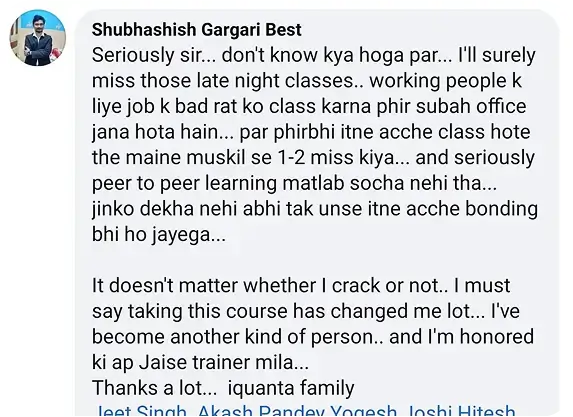
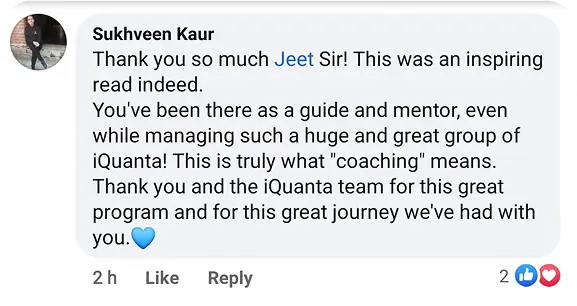
Hundreds of CAT aspirants have improved their score and cracked top IIMs in their second attempt with iQuanta CAT Course. Check their experience below.
Watch Rushikesh
share his experience

The iQuanta CAT Course specifically addresses the challenge of CAT Quant difficulty with its specialized modules. Recognizing that the CAT Quant syllabus is built on basic Class 6-10 mathematics, the difficulty comes from combining high-order thinking and multiple concepts under pressure. The exclusive Non-Engineer's QA Module provides a complete foundation refresher of relevant NCERT 6-10 Mathematics, which hundreds of students have used to dramatically improve their Quant basics. Furthermore, modules like CutShort are integrated into the iQuanta CAT Course to help students move beyond the basics and master the advanced techniques necessary for speed and accuracy.
Mode of preparation can have a huge impact on one’s preparation. Generally, online mode of preparation is considered to be more suitable than offline coaching, considering it provides updated and easily accessible content. When talking of factors like affordability and time efficiency online mode again has an edge over traditional offline coaching.
There are various CAT courses available in the market, yet iQuanta’s CAT 2026 Course is considered to be the most liked course by aspirants. Offerings like Non-engineers Quant conceptual videos, Engineers VARC Module, Dual mode of learning, and 24/7 doubt-solving facility make the Course interesting for the aspirants. With iQuanta one can have an unusual edge in the competition, as the content is highly relevant. Every year, several questions in the CAT exam are similar to what was taught in the iQuanta CAT classes.
The Core CAT syllabus is essentially built upon middle school concepts (Class 6 to 10), but its difficulty lies in testing multiple core concepts simultaneously within a timed manner. The difference between a 99%iler and others often depends on the quantity and quality of practice. iQuanta solves this challenge with its Dual Pedagogy: our live classes are immediately followed by dedicated application classes where students practice CAT level questions on the concept just taught. This unique integration of syllabus completion and question practice within the iQuanta CAT classes is one of the most important reasons iQuanta has consistently achieved the highest number of 99%ilers in the industry, with all iQuanta CAT Course students getting access to both types of classes.
The course structure is designed so that practice is mandatory. After every Live Class, the dedicated Application Class focuses entirely on solving CAT level questions, guaranteeing that you gain real-time application experience directly after learning the concept.
The difficulty lies not in the concepts, but in the exam's design. CAT questions test multiple core concepts simultaneously in a highly timed manner. Our course focuses on the application skills and high-order thinking required to solve these integrated problems efficiently.
iQuanta offers 24x7 Instant Doubt Solving. We guarantee that doubts, posted via text or image, are typically resolved within 15 minutes by Top Faculties and 99%ile mentors. Your preparation never stops for a doubt.
Yes. Our 24x7 doubt-solving support is not limited to iQuanta material. You can ask doubts from any study resources you are using for your CAT 2026 preparation.
iQuanta is proven to be an industry leader. Our unique Dual Pedagogy and dedicated practice framework are key reasons why iQuanta has produced the highest number of 99%ilers in the industry, making it the definitive choice for serious aspirants.