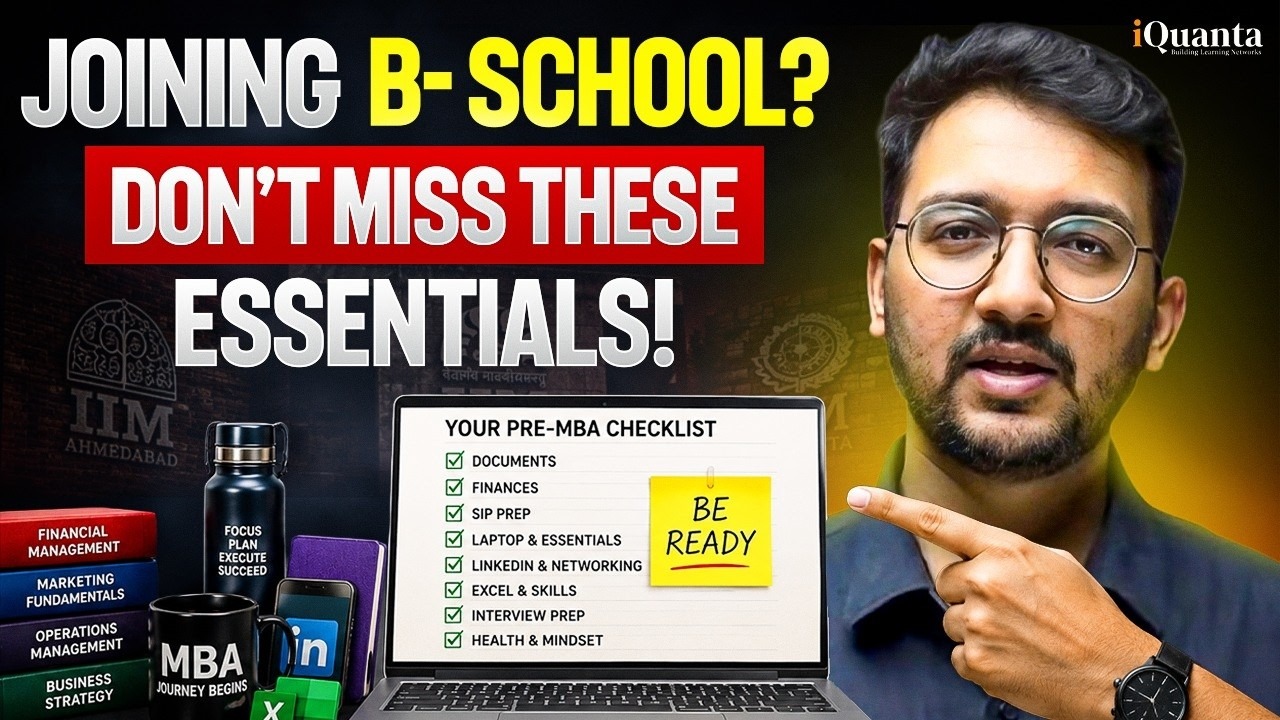
Getting ready to start your classes at one of the IIMs or any top MBA colleges? Now that you’ve cracked the exam, survived the interviews, and finally have that admission letter in hand. It’s time to make sure the upcoming new journey starts with a smooth sail. Yet you might be dealing with the overwhelmingly tense feeling when preparing for Day 1 at your IIM or top B-school. And if you’re honest with yourself, there’s probably a fair amount of confusion swirling around right now. What do you pack? What documents do you need? How much money should you carry? This blog acts as a comprehensive guide to help you walk in on Day 1 feeling prepared, not panicked.

Get Your Electronics Right
Here is the checklist:
- Laptop
- Laptop Charger
- Extension Board
- Power Bank
- Earphones
- USB Drive
Your laptop is going to be your most important tool for the next two years. You’ll be running Excel models, building PowerPoint decks, working with different software for research methods courses. The minimum you should aim for is 16GB RAM and 512GB internal storage. HP EliteBook, Lenovo ThinkPad, and MacBooks are all solid choices. In the case of MacBooks, there are certain software used in MBA courses that aren’t Mac-compatible, so you may hit a wall in case such situations come. If you already have one, know that it’s manageable, but worth knowing upfront.
Beyond the laptop, pack a power bank, and that’s non-negotiable. Reason being that your days may run from 9 AM to 7 PM or beyond. You’ll need an extension board in case your hostel bed and the only wall socket are on opposite ends of the room. Other essential electronic items that you need to carry are good earphones or headphones for online classes and pre-placement talks, and an external SSD or USB drive to back up two years’ worth of presentations, reports, and notes.
Smart Packaging
Academic Essentials Checklist
- Backpack
- Notebook
- Pens
- Folder for Documents
Get a sturdy and comfortable backpack that fits your laptop, notebooks, and potentially thick books filled with real business case studies that you’ll use in class. Invest in a sturdy, comfortable bag you can wear all day.
Formal Wear Checklist
- Business Formal Shirts
- Formal Trousers
- Blazer
- Formal Shoes
- Belts and Tie
- One Sports shoe
On the clothing front, MBA life calls for three distinct wardrobes. Business formals, including blazer, tie, white shirt, trousers, and formal shoes, are reserved for placement season. Classroom formals are simpler. Keep a good shirt and trousers; no tie needed. And smart casuals like polo tees, jeans, and sports shoes cover everything else, from lectures to campus outings.
Personal Essentials Checklist
- Medicines
- Toiletries
- Water Bottle
- Umbrella
- Laundry Bag
- Bedsheet and Pillow Covers
A new place needs adjustment given the climatic conditions that can take a toll on your health. Pack your medicines both prescribed and common ones like paracetamol and cold tablets. Have a water bottle for staying hydrated through long days, an umbrella because many B-schools are in high-rainfall regions and monsoon season is right around the corner, a laundry bag for the shared hostel washing machines, and bedsheets and pillow covers.
Sort Your Documents Before You Leave
Academic Documents Checklist
- Admission Offer Letter
- Graduation Degree/Provisional Certificate
- Graduation Marksheets
- Class 10 Marksheets
- Class 12 Marksheets
- CAT/XAT/GMAT Scorecard
- Internship Certificates
- Relieving Letter (if applicable)
Arriving without the right paperwork is the kind of stress you don’t need. Make sure you have your admission letter, graduation degree or provisional certificate, marksheets from Class 10, 12, and graduation, your CAT/XAT/GMAT scorecard, and any internship certificates or work experience documents and relieving letters.
For identity proof, carry your Aadhaar card, PAN card, driving licence, passport-size photographs, and your passport if you have one. It’ll come in handy for student exchange programs down the line.
Most importantly, create digital backups of everything. Scan all documents and store them on Google Drive or OneDrive, and keep a copy on a pen drive as physical documents can get lost.
Get Your Finances in Order
Funding Checklist
- Arrange Tuition Fee Payments
- Complete Education Loan Formalities
- Understand Repayment Obligations
- Arrange Emergency Funds
If you’re taking an education loan, make sure all formalities are completed before you leave, you don’t want to be chasing paperwork remotely. Understand your repayment timeline too. Typically, repayment begins three years after the loan is taken (two years of MBA plus a one-year grace period), though you can start earlier if you choose. Always keep an emergency fund aside. Unexpected trips home, sudden expenses, and unplanned situations are a reality of two years away from home.
Budgeting Checklist
- Create Monthly Budget
- Estimate Hostel and Living Expenses
- Plan Travel Expenses
- Plan Networking and Event Expenses
- Track Expenses Regularly
For day-to-day living, hostel life at a B-school is surprisingly affordable. Monthly expenses typically stay in the Rs 5,000 – Rs 7,000 range, even accounting for eating outside when mess food doesn’t cut it. Also plan your travel to campus, some locations like IIM Shillong require flying into Guwahati and then taking a road transfer, so don’t leave that to the last minute.
Banking Related Checklist
- Carry at least two active bank accounts
- Carry at least one credit card
- Enable UPI and digital payments
- Update KYC details
On the banking side, keep at least two active bank accounts, have a credit card for emergencies, and ensure your UPI and digital payments are set up, and KYC details are updated as many campus vendors and services are cashless.
Choose Your Clubs and Committees Wisely
Every B-school offers a rich ecosystem of clubs like Consulting, Finance, Marketing, Product Management, Analytics, Entrepreneurship alongside operational committees like the Academic Committee, Admissions Committee, Cultural Committee, Placement Committee, Student Council, Corporate Relations, and Alumni Committee.
The Placement Committee is worth special consideration. On the plus side, you build strong HR connections that last well beyond MBA. On the downside, the time commitment is significant, and you have to maintain a professional distance from your batch, which can impact your social experience. Neither choice is wrong, it depends on what you value more: future corporate relationships or a fuller MBA life. Research the selection process and time commitment for any committee before you decide.
Start Thinking About Internships on Day One
Summer internship interviews at many B-schools begin as early as August, barely a month or two after you’ve joined. That means the recruiters sitting across from you in those early interviews could very well be your final placement recruiters too, if you land a Pre-Placement Offer (PPO).
Understand your campus’s Summer Internship Programme (SIP) process early. Look at which companies have recruited in previous years. The preparation starts much sooner than most first-years expect.
Walking in prepared and with the right gear, the right documents, the right financial footing, and the right mindset means you spend less time scrambling and more time making the most of every opportunity that comes your way.
An MBA is a huge career investment. You must have a strong foundation before joining the program. Doing the right certifications gives you an edge. The good news is that you do not need costly courses. Many free certifications to do before an MBA are available. Start with the fundamentals. Choose certifications based on your goals. These certifications can simplify your MBA journey and help you get better internships/placements. Start today. Even one certification can transform your MBA journey.