1. India–UN Development Partnership Fund
Recently, the 9th annual India–UN Development Partnership Fund meeting was held at the UNGA.
India–UN Development Partnership Fund:
- It was established in 2017, and the Indian Government committed $150 million.
- The fund is managed by the UN Office for South-South Cooperation and implemented by agencies like UNDP, UNEP, etc., and the beneficiary governments.
- The beneficiaries are Least Developed Countries (LDCs), Landlocked Developing Countries (LLDCs), and Small Island Developing States (SIDS), including more than 70 members.
- It includes targeted financial allocation through the Commonwealth Window, Pacific Island Developing States Window, and CARICOM Window.
- This fund helps in achieving the Sustainable Development Goals (SDGs), with a major focus on:
- SDG 3 – Good Health
- SDG 4 – Quality Education
- SDG 1 – Poverty Reduction
- SDG 13 – Climate Action
2. Prof. Ashoke Sen Won the Oskar Klein Medal
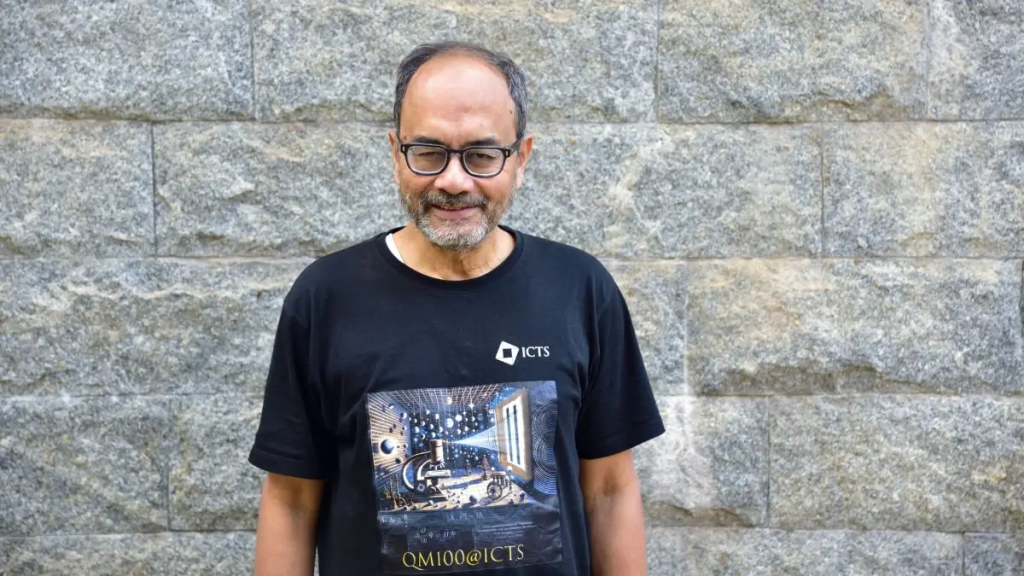
Prof. Ashoke Sen, a theoretical physicist, became the first Indian physicist to be awarded the Oskar Klein Medal by Stockholm University and the Royal Swedish Academy of Sciences.
Major Scientific Contributions
- He proved the strong–weak coupling duality in supersymmetric string theories and established that different string theories are unified limits of a single underlying framework. He also provided the Sen Conjecture for String Theory.
- He developed the entropy function formalism for extremal black holes and contributed to the counting of black hole microstates.
Major Honors
1. International Recognition
- Oskar Klein Medal (2026)
- Dirac Medal (2014)
- Inaugural Breakthrough Prize in Fundamental Physics (2012)
2. National Awards
- Padma Bhushan (2013)
- Padma Shri (2001)
- Shanti Swarup Bhatnagar Award (1994)
3. Earthquake Hits the Pacific Ocean Waters Near Vanuatu
An earthquake of magnitude 7.2 hit the Pacific Ocean near Vanuatu at a shallow depth of 10 km.
About Vanuatu
- Vanuatu is an island nation situated in the South Pacific Ocean.
- It is located east of Australia and west of Fiji.
- Capital: Port Vila
- This island nation lies within the chain of volcanoes formed due to the convergence of the Australian and Pacific tectonic plates, known as the Pacific Ring of Fire.
4. India’s Strategy for Carbon Capture, Utilization and Storage (CCUS)
The Indian government announced ₹20,000 crore in the Union Budget 2026 for five years for CCUS to balance industrial growth and development with the achievement of Net Zero targets.
About CCUS
These are a combination of technologies used to capture carbon dioxide emissions from high-emission sectors such as cement, power, and steel before they enter the atmosphere. The captured carbon dioxide is stored underground or used in production.
This is important for combating and controlling the impacts of climate change.
Implementation in Three Phases
- Phase I: Focus on research and testing, including the use of AI and its applications to map areas.
- Phase II: Focus on building infrastructure through Public–Private Partnerships (PPP).
- Phase III: Develop commercially viable infrastructure to capture 1 million tonnes of emissions per year from industry and integrate it with India’s blue hydrogen strategy.
5. National Mission for Clean Ganga Directed by NGT to Form a Technical Panel to Investigate the Budhi Ganga River
About Budhi Ganga River
- It originates in Dewal Village near Muzaffarnagar, Uttar Pradesh.
- It flows through Hastinapur and joins the Ganga River near Hapur.
- Total length: Approximately 93 km.
- It is an important source of water for the region because of its hydrology and biodiversity near the Ganga River basin.
About the National Mission for Clean Ganga (NMCG)
- It was formed in 2011 and registered as a society under the Societies Registration Act, 1860.
- It functions under the Ministry of Jal Shakti and is the implementing arm of the National Ganga Council.
- Primary objectives:
- Control river pollution.
- Restore ecological balance.
- Ensure ecological minimum flow.
- It promotes Arth Ganga, a programme linking river restoration with sustainable livelihood models, tourism, and circular water reuse.
6. New Carbon Allotrope: Diamondiyne
About Diamondiyne
Diamondiyne is a newly synthesized, three-dimensional pure carbon allotrope that was predicted 35 years ago. It possesses a porous, expanded 3D network resembling two interlocking climbing frames.
Other allotropes of carbon:
- Diamond
- Graphite
- Graphene
- Fullerenes
- Carbon nanotubes
Structure
- It has a 3D tetrahedral framework of diamond with an expanded network containing carbon–carbon triple bonds.
- It combines triple bonds and tetrahedrally hybridized carbon atoms.
- It is highly porous because of its open, repeating 3D lattice.
Synthesis
It is synthesized at a liquid–liquid interface through a cascade reaction. Copper fluoride is used as a catalyst to facilitate carbon–carbon coupling, forming thin films containing diamondiyne crystals.
7. Cyclone Arnab Is Forming in the Bay of Bengal
The cyclone made landfall near the North Andhra Pradesh–South Odisha coast, near Kalingapatnam. The name Arnab was given by Bangladesh and means “Ocean.”
About Cyclones
Cyclones are large, swirling tropical storms. They mainly form over warm ocean waters, and wind speeds can exceed 119 km/h.
Parts of a Cyclone
- Eye: The hole at the centre of the storm, with light winds. The skies may be partly cloudy or sometimes clear.
- Eyewall: A ring of thunderstorms swirling around the eye. Winds are strongest here, accompanied by heavy rainfall.
- Rain Bands: Bands of clouds that stretch over hundreds of kilometres and carry thunderstorms.
Necessary Conditions for Cyclone Formation
- Warm ocean surface temperatures of 26°C or higher.
- High humidity.
- Presence of the Coriolis force.
- Minimal changes in vertical wind speed.
- Presence of a weak, low-pressure area at the surface.